Pliva is relatively small river in the north-central part of the Bosnia region of Bosnia and Herzegovina set in the stunning natural landscape.
Why visit Pliva? Because it is a beautiful calm spot with clean water, clean air and a very friendly community. Pliva was the perfect spot, why? For us to unwind, collect our thoughts and even do a little work.
Walking the Pliva River with our guide Leo in Bosnia Herzegovina
We stayed at the Vacation Home Pliva, Brđani – a beautiful and simple vacation home with all the amenities you need. The family owning the property are incredibly welcoming, warm and super friendly. They made us feel relaxed and part of the family immediately. The property sits right on the riverbank. There is even a room on the river with a glass floor.
There are a few local shops with basic necessities like eggs, milk, butter and of course beer if you need it. You can expect to a little more for your shopping. The local restaurant charges about double what you’d expect to pay in the city, but the beer is still cheap!
Fly fishing in Pliva is very popular. Groups coming from all over the world to spend time wading up and down the river perfecting their cast. It’s common to see fishing tourists relaxing in the local ‘bar’ telling their stories of ‘the one that got away’. We met Paul Arden from sexyloops.com (world renowned fly fisherman) who was great fun to chat with, not only about Fly fishing, but also about the area in general.
Walking the Pliva River in Bosnia Herzegovina
Take a stroll up the river and find the source (there are two). The water magically springs out of a cave or from under the rocks, it’s hard to imagine that this river starts as something so small.
How to get to Pliva; We took a taxi from Banja Luka directly to Pliva which cost us €38. You can also catch a bus to the nearest town of Šipovo and take a short 10 minute taxi ride for about €7,50.
We couldn’t have asked for more. Would definitely visit again.
More Bosnia and Herzegovina!
Make sure to see our Bosnia and Herzegovina page with all our travel tips, travel map and all our blog posts about Bosnia and Herzegovina.
There are loads of places where you get a cup of black gold in and around Zagreb, but some of the best coffee in Zagreb can be found at the Cogito Coffee Shop, they have several shops dotted around the city and pride themselves in sourcing their coffee with care, emphasizing its seasonality and origin. It’s true. Their coffee is made with passion and served with love.
Check out their HQ ‘In the yard’. It has a very nice outdoor seating area and is located just off the main street near the Botanical gardens.
Their other branch Deželića is much smaller and has an on street patio which is also nice, but not as relaxing.
Cogito Coffee Deželića Zagreb
Both coffee shops serve their own specialties and have great staff to help you choose from their extensive coffee varieties.
More Croatia!
Make sure to see our Croatia page with tips about travel in Croatia, map and all our blog posts about Croatia.
Pula is the biggest city in Istria, Croatia, and the eighth biggest city in the country. It’s located at the southern tip of the Istria peninsula. Pula is known for its large number of old Roman structures, the most acclaimed of which is the Pula Arena, a standout among other preserved Roman amphitheaters. The city has a long tradition of wine making, angling, shipbuilding, and tourism. It used to be Istria’s authoritative focus since antiquated Roman times, until the point when Pazin turned into its regulatory focus in 1991.
The city center is quite small with paved winding walkways, dozens of restaurants catering to the mostly day-time tourists which means in the evening it’s pretty quiet.
The Roman Amphitheater
The amphitheater is small enough to walk around in a half hour. You get a good view inside without having to pay the entrance fee. Infact Pula’s ampitheatre is more intact than it’s cousin in Rome, boasting a near complete ring of walls. It is also in regular use, staging the Film Festival, the opening night of electronic music bash Outlook, Dimensions and other big-name concerts.
The Amphitheater in Pula
Pula Triumphal Arch
The Arch of the Sergii remains the main gateway into what is now Pula’s historic center, virtually intact after more than 2,000 years. Today’s pedestrians walk below its portal to access ulica Sergijevaca. You can still see details relating to the events of 31BC, the names of the Sergii clan inscribed on the columns, and a chariot on the frieze.
Fort Monvidal
There is the old Fort on the hill, again no need to walk in and pay any entrance fee if you’re not really into forts and history. You can walk around the whole fort on the outside and get the same views of the historic center and the cranes of the nearby shipyard for free.
View from Fort Monvidal
Pula Market
As well as the outside free market there is also the undercover market. It is housed in a historic building with a distinctive architectural style. Constructed out of wrought iron. Traders fill two floors with fish, meat and other local sundry produce, while local fresh fruit, vegetables, honeys, wines and oils can be found in abundance.
Most tourists will happily see all there is to offer in a day.
By the harbour in Pula
More Croatia!
Make sure to see our Croatia page with tips about travel in Croatia, map and all our blog posts about Croatia.
We had some really amazing food in Yogyakarta, and will share them with you in this guide of where to eat in Yogyakarta. We also ate at some random street food stalls, which we cannot remember the name of. But they all had really good food. In general, I would say that street food in Yogyakarta is safe to eat. But follow your instinct, and the locals.
Travel Tip – Never walk past a bunch of people queuing up for street food. ALWAYS take a look at whats being cooked up, use your eyes and your nose. If it looks good and smells good and 50 other people are ordering it and sat around eating it, it’s probably going to be not only OK to eat, but one of the best dishes you’ll experience on your travel.
There are a few dishes you should definitely try that are typical from Yogyakarta. One of them being Gudeg. Gudeg is a coconut milk based stew with Jackfruit in it. It also has palm sugar in it, and I find it a bit too sweet. It’s hard to describe the taste of this, you will just need to try it! You will find places that serves Gudeg all of the city, so just pick one.
All the places below are listed on our Indonesia map.
Waroeng SS
On the South side of Yogya we found Waroeng SS Special Sambal, purely by chance as it was just round the corner from our hotel. You can choose to sit around a table or down on the floor. If you choose the raised floor, make sure to take off your shoes. Service is fast, so grab an ice-tea straight away and get comfy with the menu.
A happy Sam at Waroeng SS
There is a HUGE range of Sambals here (33 in all I think). The menu is, traditional Indonesian, which is a bit like a tapas menu, just lots of stuff either grilled, fried or steamed. The staff speak great English and can help you with what you order. We found that ordering about 4 sambals and another 8 main dishes with a portion of steamed rice would be enough (well for us). But you can just keep ordering if you are still hungry for more.
This place is renowned for their Special Sambals, so be adventurous. There are hundreds if not thousands of sambal recipes in Indonesia, some are famous in their own right like colo colo (pronounced Chollo Chollo), from Maluku, which is intense Sweet Soy sauce called Ketjap with fresh Indonesian chilies, traditionally served with fish.
All the yummy food and sambals at Waroeng SS
Read more about sambals and Indonesian food in the blog post “Best Indonesian food“.
Sate Taichan Senayan Yogya
Just down the road from Waroeng SS is Sate Taichan Senayan Yogya set up on the sidewalk with two sate grills and about 10 staff working service, delivering food and drinks. It cost 18k IDR or about €1 for 10 Sate Sticks and Thai Tea for 5k IDR or about €0.30.
Chicken sates and amazing spicy sambal at Sate Taichan Senayan Yogya
We also found this place by accident. When walking around we saw all these locals queuing up, and decided we had to check it out. We were the only non Indonesians, and got many smiles when we ordered in broken Bahasa mixed with English and sat down. The sates was amazing, by far the best chicken sates either of us has had in Indonesia so far.
Sitting area at Sate Taichan Senayan Yogya
I have no clue if this was a pop up thing or if it’s always there, but if you walk pass it make sure to stop for some sates. We added where it is on our Indonesia map.
More Indonesia!
Make sure to see our Indonesia page with tips about travel in Indonesia, map and all our blog posts about Indonesia.
Both of us absolutely loved the train ride, a chance to relax for a few hours and enjoy the beautiful views outside the window. This is our experience of going from Jakarta to Yogyakarta by train.
Distance: 530km
Time: 8h 40min
Cost: €25 (Executive class with air-con)
Beware – Different trains leave from different stations, this was our experience with the Executive class train travelling from Jakarta Gambir to Yogyakarta Tugu by train.
Enjoy the stunning countryside of Java from the train
Buy your Tickets
You can buy a train ticket at Gambir Station (best to buy at least a day in advance). OK don’t be scared. There’s a bunch of people sitting around waiting for a ticket window… completely ignore that queue. That is for people who wish to buy tickets at a discount (service men/pensioners etc). Turn around and look behind you, there’s an air conditioned office with ‘Service Center’ written above it, inside will be two nice ladies who will sell you your train tickets and tell you what you have to do. They take Cash or Credit Cards and don’t charge anymore than the normal ticket price, and you will need your passport as identification.
Once you have your ticket you must ‘Check-in’, which you can do from 24 hours before you depart until 2 hours before departure. There was a machine where you just show it the bar code and it confirms your seat. After that, we headed back to town to pack for the early start the next day.
The Journey
We booked a blue-bird taxi via the app to collect us at 6am, even though the journey was 10 minutes from our apartment, this is Jakarta and traffic always has the potential to mess with you. So make sure to plan in sufficient time to get to the train station.
When we arrived at the train station we first grabbed a few supplies, coffee, cakes, ice-tea. Then showed our tickets and passports at the gate and headed upstairs to the platform. We found our seats very easily, nice wide, reclining and it’s all air-cooled. It’s not modern by any means, but it’s clean, pretty quiet, the toilets are acceptable (mind your head for the hooks on the inside of the toilet door!). In the main carriage there’s a small TV up front or behind which plays random TV shows and adverts. Train staff come round and check your ticket.
Restaurant Car on the train from Jakarta to Yogyakarta
After about 20 mins a cart come’s round with two staff asking if you want drinks or food… None of it is great, so I hope you packed some supplies. After we exhausted the pastries we bought we headed for something hot and found the dining car and some instant noodles, which are pretty awesome in their own right. Staff are super friendly and super smiley, and yes they wanted a selfie.
There’s a couple of stops along the way if you want to stretch your legs for 5 mins or get some air, but he journey is really nice, rolling though the country side. For the best view, get the seats on the right (you can choose them when you book), as you’ll be passing through stunning green natural beauty, rice fields and volcano’s. It’s not fast, but if you catch the early train you arrive in Yogya at about 16.30.
Livia enjoys the peaceful journey through the Java countryside
Interestingly enough, the train we caught is the same train we saw a year earlier on our Hidden Jakarta Tour.
For anyone who knows us, or has read our other blog posts, you know that we love food and especially Indonesian food. You can find any type of food and standard of restaurant in Jakarta, from street food to 5 star restaurants. I have far from tried all restaurants in Jakarta, also new ones are popping up all the time. But in this guide to where to eat in Jakarta I have listed some of my favourite places to eat, which I usually go back to every time I’m in the city.
Street food can be found anywhere in Jakarta, it’s hard to pinpoint these as they move around and are not always there. Therefore I won’t come with any specific tips on tips, more than follow your nose and don’t be scared of trying street food, follow the locals. There are many street food areas, everywhere where many people are passing you will find street food stalls with different types of food.
Warungs
Warungs are local restaurants, very simple. At street food stalls and warungs is where I’ve had most of my best meals in Indonesia. In general warungs are very cheap to eat at, a little bit more expensive than street food, but still very cheap. Here are some of my favourite warungs in Jakarta:
Bakmi Cong Sim
Located in Mangga Besar, between Glodok and Thamrin is this little place. It serves Bakmi, noodles. Simple but oh so tasty! Still dreaming about these noodles.
Bakmi at Bakmi Cong Sim
Nasi Uduk Kebon Kacang Zainal Fanani
Great little local place in a small alley in Thamrin. Their specialty, Ayam Goreng (friend chicken) and Ayam Bakar (grilled chicken).
Warung Nasi Uduk Kebon Kacang Zainal Fanani in Jakarta
Warteg Gang Mangga
Located in Glodok, simple warung with many dishes to choose from. We got to walk behind the counter and point on what we wanted and got huge portions of food for a very very cheap price.
Warteg Gang Mangga in Jakarta
Warung MJS
This place in Kuningan is on the fancier end of a warung. Make sure to sit in the smoking area, as this is a lovely outside garden with a small pond and loads of colourful lights. The non-smoking are on the other hand is a boring small room inside.
At this place you point/tell them what you want when you get in and then get seated. There’s loads of choice of Indonesian food, and it’s all really delicious, make sure to order many different things, as this is how you eat in Indonesia. Almost like tapas, you order many different things and share them between you. Although, when we were there we over did it and couldn’t finish it all.
It’s a very popular place, so you might have to queue for a bit if you come in rush time, but it’s definitely worth it.
The garden at Warung MJS, Jakarta
Restaurants
Restaurants are the next step up from warungs. However, there are loads of varieties in restaurants in Jakarta. From local Indonesian places to Western 5 star restaurants. Here are some of my favourite restaurants in Jakarta, most of them Indonesian food:
Restoran Garuda Sabang
This is a Padang restaurant, with food from, well yeah, Padang in Sumatra. There’s no menu and you won’t be asked what you want to eat. All the food will just appear on the table without you ordering anything. Don’t be scared tho, this is how it’s done, and you will only pay for what you eat.
It can be a bit tricky to know what is what if you don’t have an Indonesian with you, but on the other hand you can just try what looks good or ask the people working there. The padang cuisine do have some food that is not common in the west, such as brain, so if you don’t fancy that you might want to ask someone.
This place is still cheap to be a restaurant.
Padang food at Restoran Garuda Sabang, Jakarta
Bebek Bengil
Whenever I crave Balinese food whilst in Jakarta, I head to Bebek Bengil in Menteng. It’s so nice to walk in here through their lush little garden with Balinese music playing in the background. Try their speciality, grilled duck!
This restaurant is a bit pricier, but still ok.
Sambals at Bebek Bengil in Jakarta
Sate Khas Senayan
This place started off as a street food stall, which turned into restaurants. There are a few different locations around Jakarta. They serve the classic Indonesian street food dishes, such as Sate, Tongseng, etc. but in a restaurant setting. It’s still a local place and with good prices and very popular among Indonesians.
THREE BUNS
This is the only western place that made it onto this list. I am a huge hamburger fan, and if you find yourself craving burgers in Jakarta, this place in Senopati is where to go. It’s a cool space with an industrial feel.
It’s on the more expensive side, located in a rich area with many expats visiting. However, still worth a visit and it’s not more expensive than European prices.
Livia at Three Buns in Jakarta
Three buns, Jakarta
Plataran Dharmawangsa
This is a more luxurious restaurant, however, I would say it’s still worth a visit. And depending on what you compare it to it’s not super expensive. It’s a very nice restaurant with a lot of artefacts and beautiful architecture. This restaurant in south of Jakarta is serving well made Indonesian dishes.
Restaurant Plataran Dharmawangsa, Jakarta
More Indonesia!
Make sure to see our Indonesia page with tips about travel in Indonesia, map and all our blog posts about Indonesia.
Who makes the best coffee in Jakarta? When you’re travelling coffee becomes a basic human necessity. You need a kick to get you up and off on the good foot.
On our recent visits to Jakarta my mission as Captain Coffee was to locate some of the best roasteries, brewers and purveyors of the dark brown elixir. Not as easy as you think considering that the island is called Java, Coffee is called Kopi and most people want to serve you a milky iced beverage.
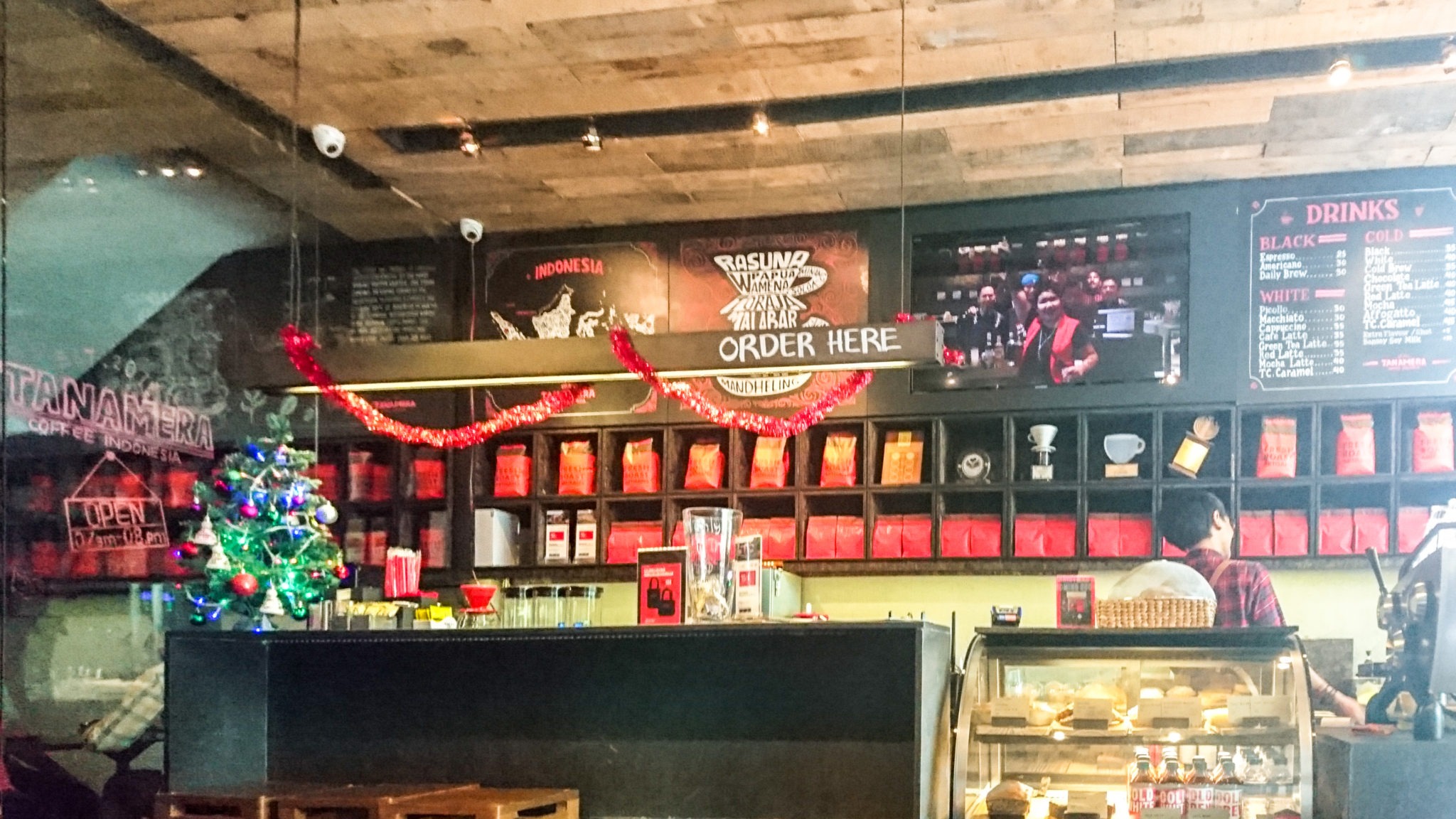
Modern, chilled coffee bar in the center of Jakarta, Thamrin. Guys in leather aprons have been proudly brewing coffee since 2013. They work with local Indonesian farmers to produce and roast a piquant coffee that is exquisite and distinctive. They serve all your favorite coffee combinations as well as cold brews, pastries and sandwiches.
The interior of red and black matching their branding is comfy and welcoming. Of course there is free wi-fi Tanamera Coffee now have eight outlets throughout Indonesia. Quite possibly the best coffee in Jakarta.
Best coffee in Jakarta. At Tanamera Coffee relax in the knowledge your coffee will be good.
#2 Kopi Es Tak Kie
Before you get yourself too involved with Jakarta’s famous Chinatown or nearby “Ghost City”, get yourself down to Kopi Es Tak Kie.
Being Jakarta’s oldest coffee house they’ve perfected their brewing skills over the last 90 years (yes since 1929) and offer a no frills brew at a really good price. There are tables and chairs and there is coffee… but that’s about it. As their name suggests they make Ice Coffee, but you can ask for hot brews, with or without milk, just don’t start asking for a de-caff soy latte OK?!
#3 Coffeebeerian
Coffee AND Craft Beer?.. yes it’s possible at Coffeebeerian. It’s a simple place with a few back rooms and a few comfy sofas. All kinds of hot/cold filter brews, specialty beans and a guy who just loves to make coffee. Not fancy, nor Instagrammable but great. It’s also a nice area (Senopati) to walk around with large houses and gardens.
#4 Toko Kopi TUKU – Pasar Santa
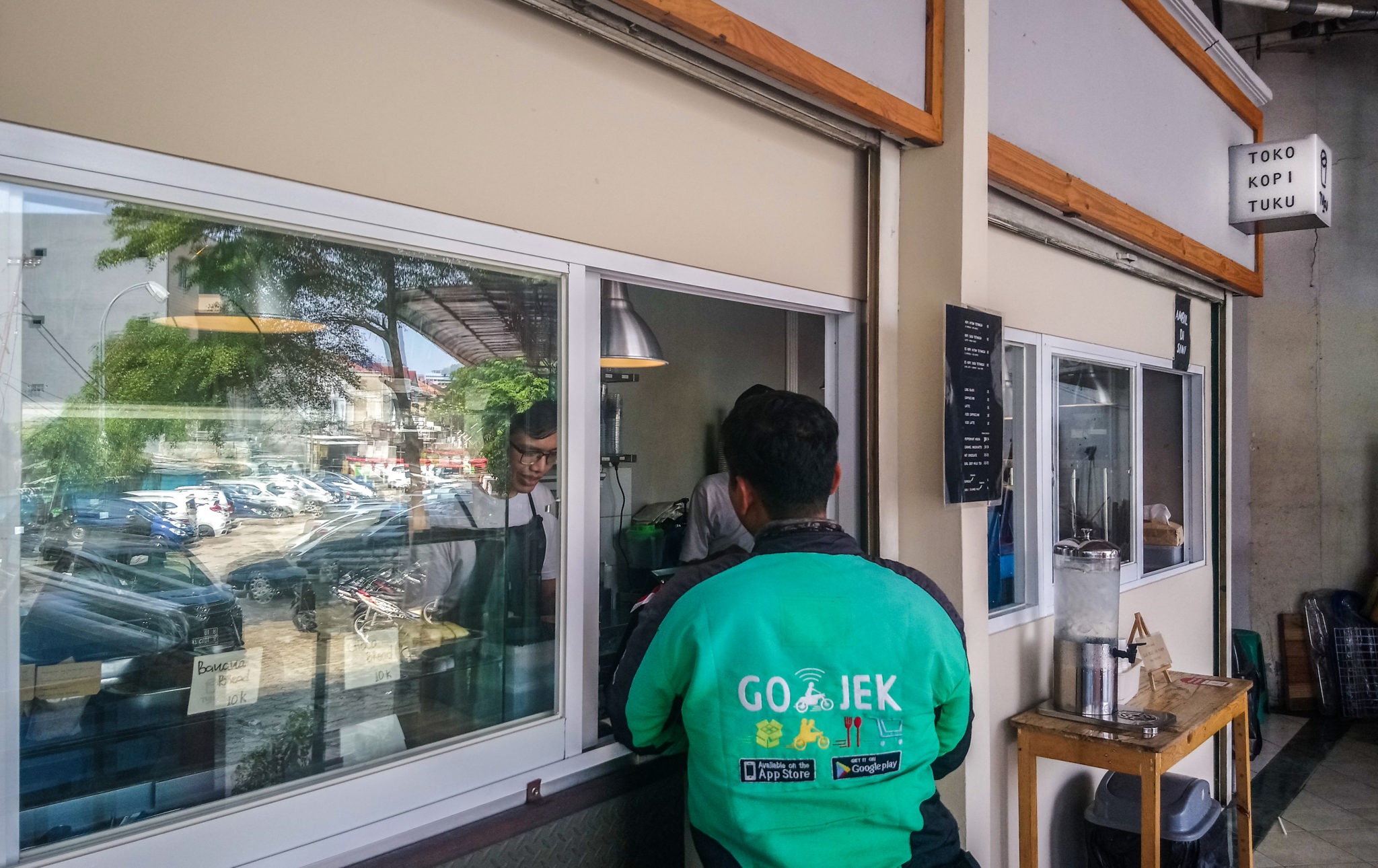
Ok, you don’t even get a table at this place, find a place to sit down on a nearby wall. At Toko Kopi TUKU you order your coffee through a sliding glass window, you can jump the queue of Go-Jek drivers. Mostly serving Ice Coffee with a plastic sealed lid and a straw it’s hard to beat on a hot day in Jakarta. Go check out the local market, upstairs are loads of cool independent shops selling toys, records, graffiti supplies and more.
Toko Kopi Kuku is not romantic by far.. but it’s damn fine coffee!
#5 Cafe Batavia
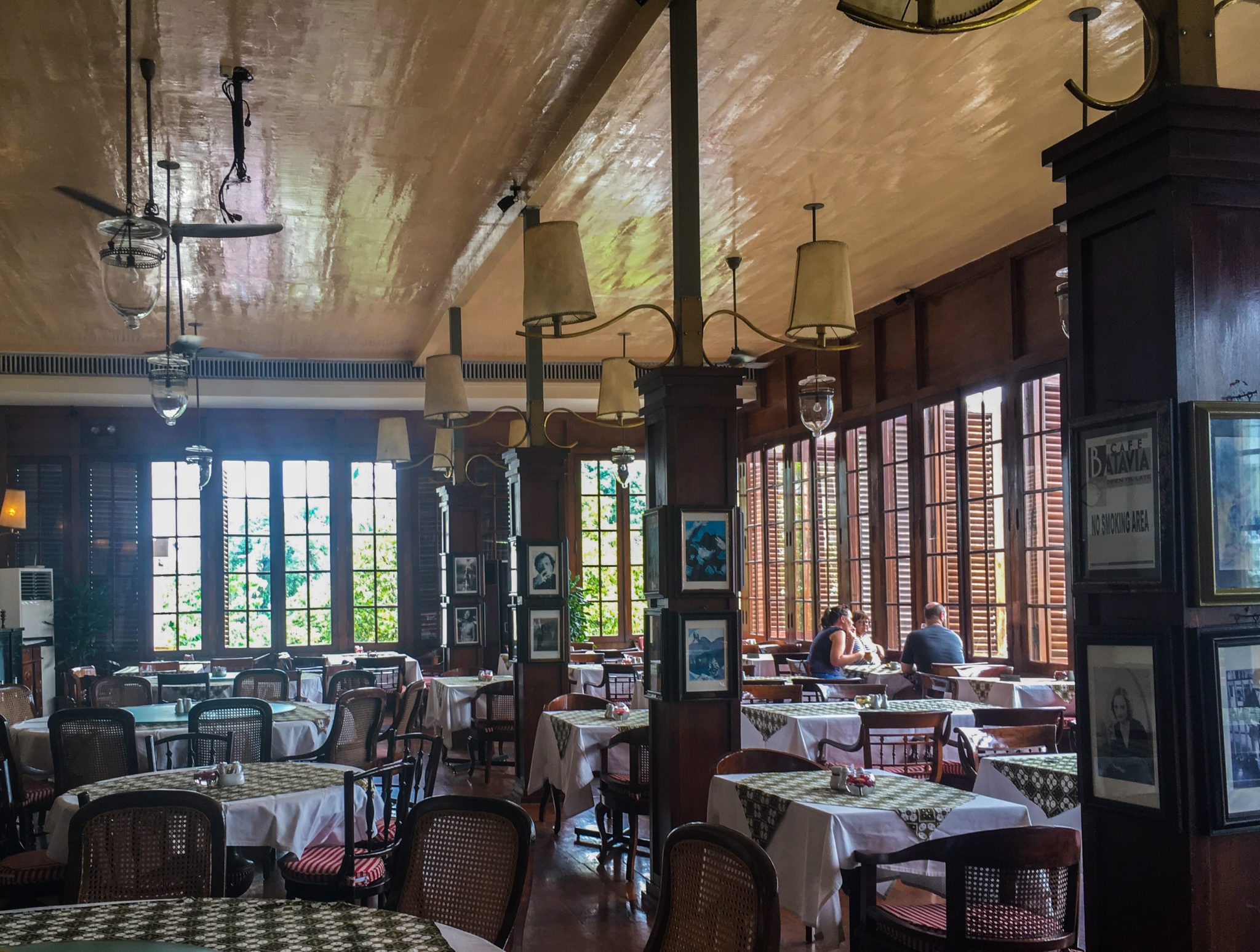
Yes it’s expensive, yes you have to get past the crowds of students wanting interviews and selfies.. but as soon as you cross the threshold of Cafe Batavia you are transported back to the Colonial Jakarta of days gone by. Sip on your coffee and look out over the square with people riding colorful rent-a-bikes and enjoy the history.
What do you think of my best coffee in Jakarta hot spots? Let me know in the comment section below. All of my best coffee in Jakarta hot spots listed above and more are available on our Indonesia Map
Many people dismiss Jakarta as a tourist destination which is such a shame as it has so much to offer the traveler, even if you’re just passing through, read our post “Why you should visit Jakarta” and our other Jakarta posts for more on this great city.
Grand interior of cafe Batavia
More Indonesia!
Make sure to see our Indonesia page with tips about travel in Indonesia, map and all our blog posts about Indonesia.
We discussed slum tourism as a couple quite a few times when we found out about the Hidden Jakarta Tour. Wether it would be ethical or not to go on this tour. Their TripAdvisor reviews seemed positive. Not only would we get to see the another completely different side of Jakarta, we would actually be contributing to a community in a sustainable and responsible way. It’s a touchy subject as most people would consider it a day looking at poor people in a very depressing human zoo. Ultimately it depends on the tour itself, which way you look at it and how it affects you as another human being.
In the end we decided to go on the tour as it wasn’t a look-at-these-poor-people-tour as many tours like these turn into. The people who run this tour are mainly doing it to raise money for these communities (all money goes directly to their different projects) and to show this part of Jakarta to Indonesian people. To make a change. This is where the importance is for us, why they run the tour. They want to make a change, this is something the government doesn’t want you to see, thereof the name Hidden Jakarta tour. But by having this tour, they raise awareness of the issue which is the first step for change. Also, many of the people working for the tour are living in these areas themselves, which we really liked. It’s also a way to give back to these communities.
The Hidden Jakarta Tour not only gives you an insight into the disparity of the city, we had a real opportunity to connect with people who were as interested in us as we were in them. “Why do you come to Jakarta?“, is a very popular question whenever we are in Jakarta. Our answer is mostly “The food and the people”. This tour made this even more true for us.
Fatahillah Square
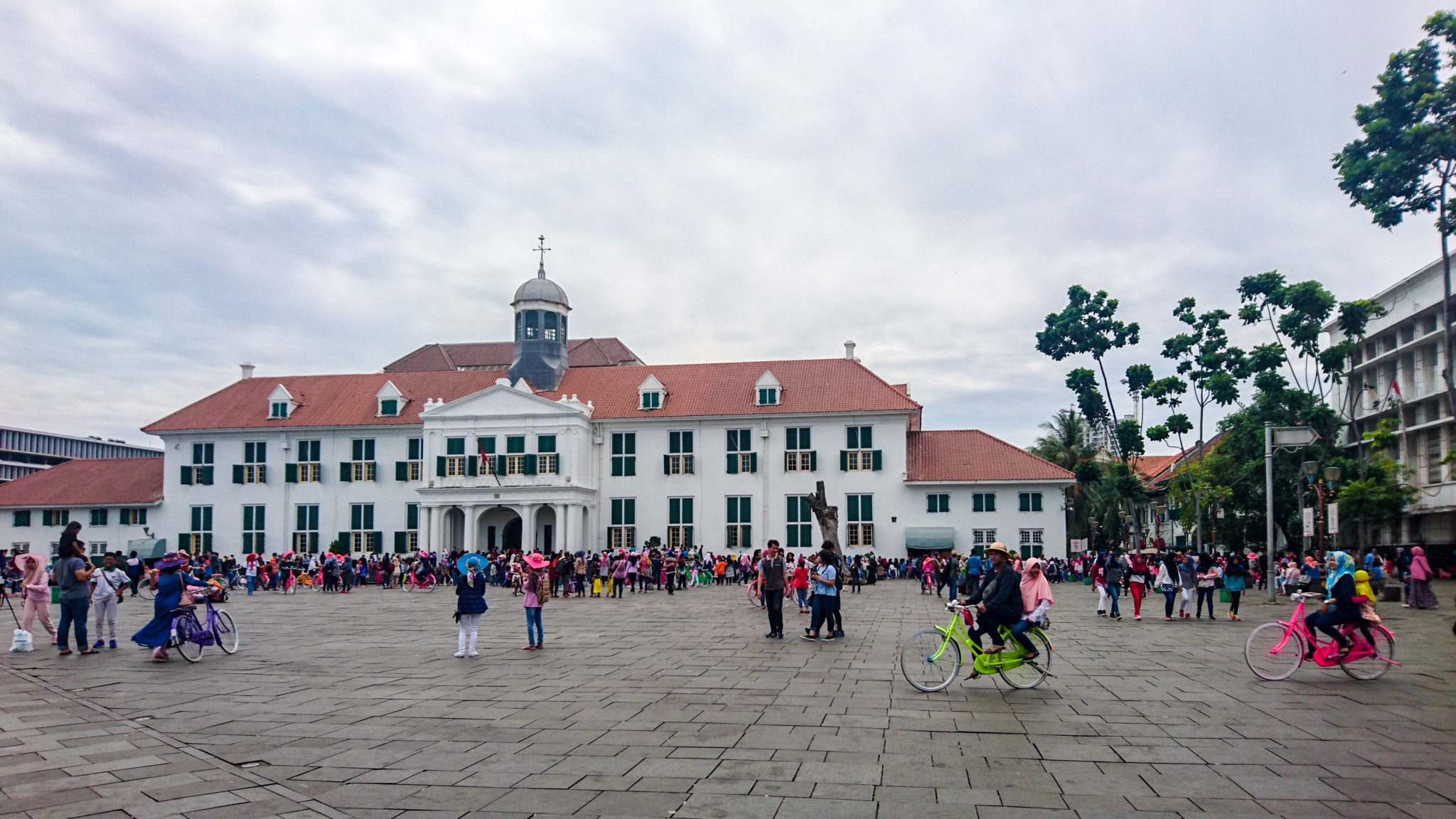
We started our day by heading off in a BlueBird taxi to Fatahillah Square. It’s a on most tourists’ to do list in Jakarta, and a main sightseeing spot. It’s also a popular place for students to grab an interview with the tourists. They ask you your name, where you’re from and why you came to Indonesia, that’s usually in front of a camera. Then they want a selfie with you, then the next person ask the same thing. You could do this all day.
Fatahillah Square Jakarta
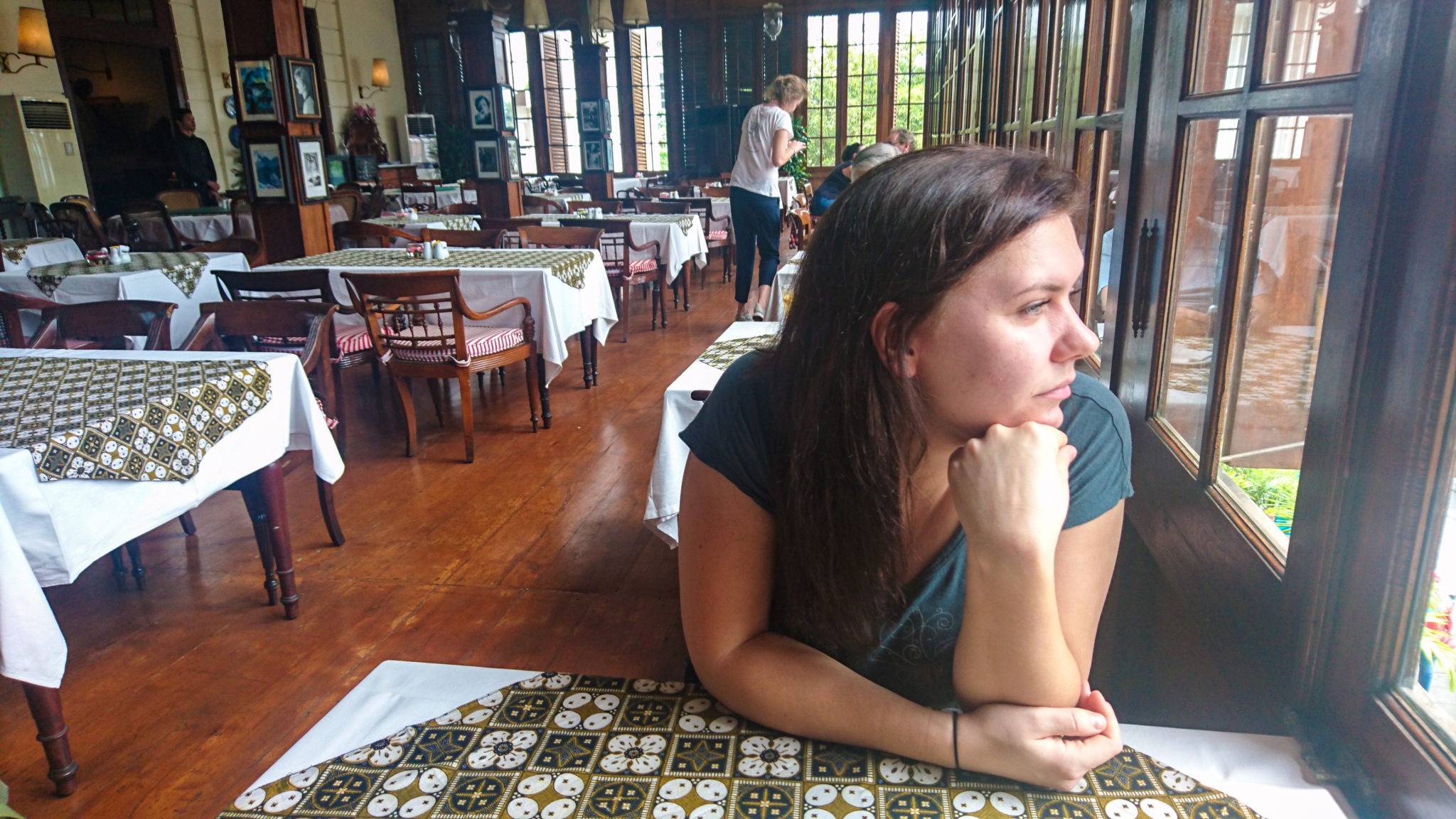
We grabbed a coffee at the famous Cafe Batavia. The food was OK, but as always in Indonesia you can get better for cheaper, essentially you’re paying for the location and the interior of the cafe. It’s well worth the visit for the location. Coffee was excellent, they have different coffee from all around Indonesia and hits a spot in my Top 5 Best Coffee in Jakarta blog post.
Drinking Coffee at Cafe Batavia Jakarta
Our guide meets us at a local cafe, Kantin Mega Rasa, just around the corner. We grabbed lunch and an ice tea, while discussing what’s in store for the day. It’s also a great time to ask anything you’d like to know and about taking photos, as that was something we viewed as a potential awkward/embarrassing, or not at all normal social behaviour. The best thing was to take it by ear, our guide would check, or as it turned out people would ask us to take their photo. Well it is Indonesia, and they do love their selfies.
The three of us jumped in a microlet (small buss for local transportation) and headed off. We jumped out at Jembatan Kota Intan, an original Bascule bridge, and after dodging the traffic we ducked into a side alley and headed off into the dark and towards the train lines.
Dark Places
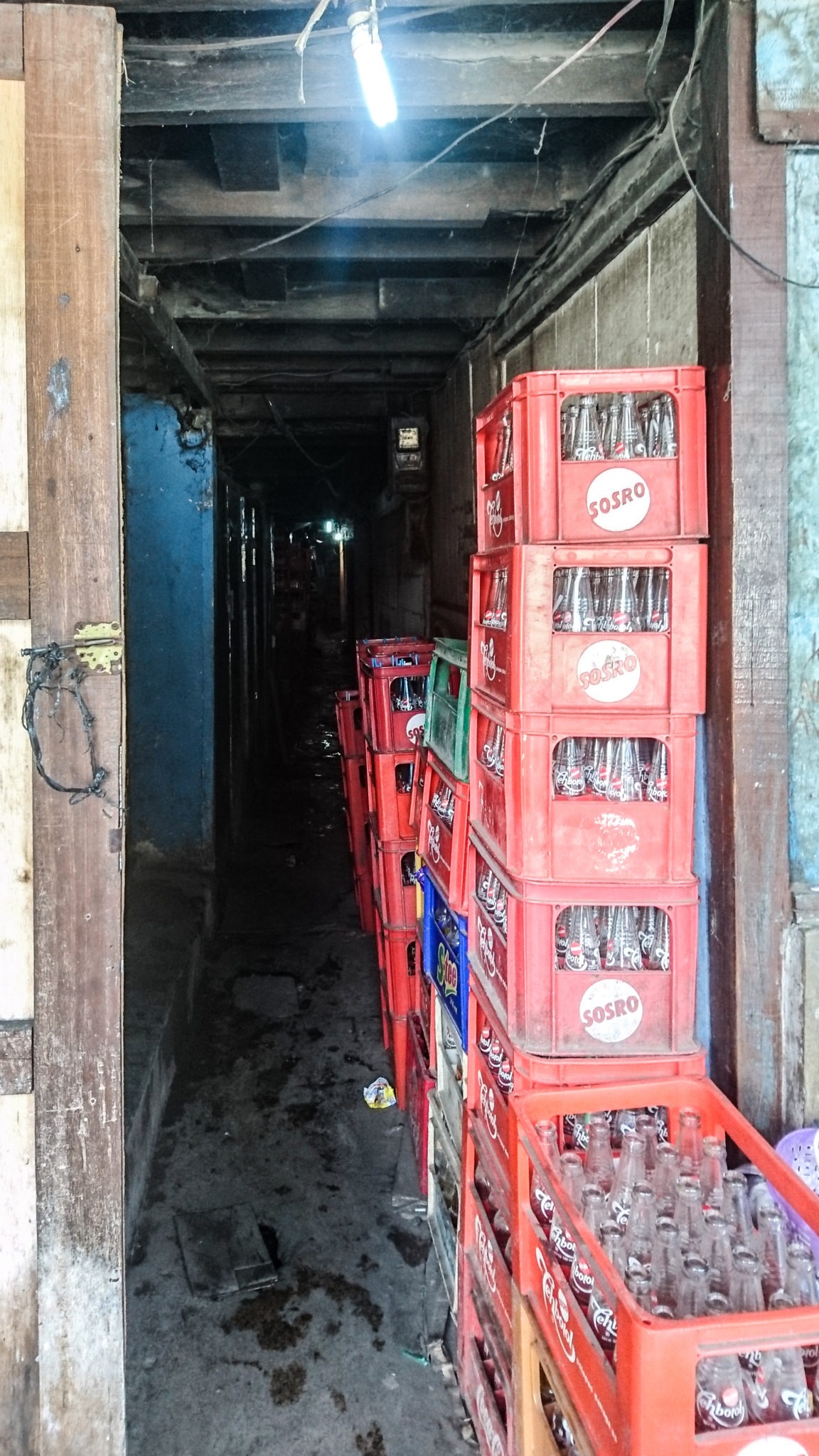
Dark alleyway leading down underneath the railway tracks
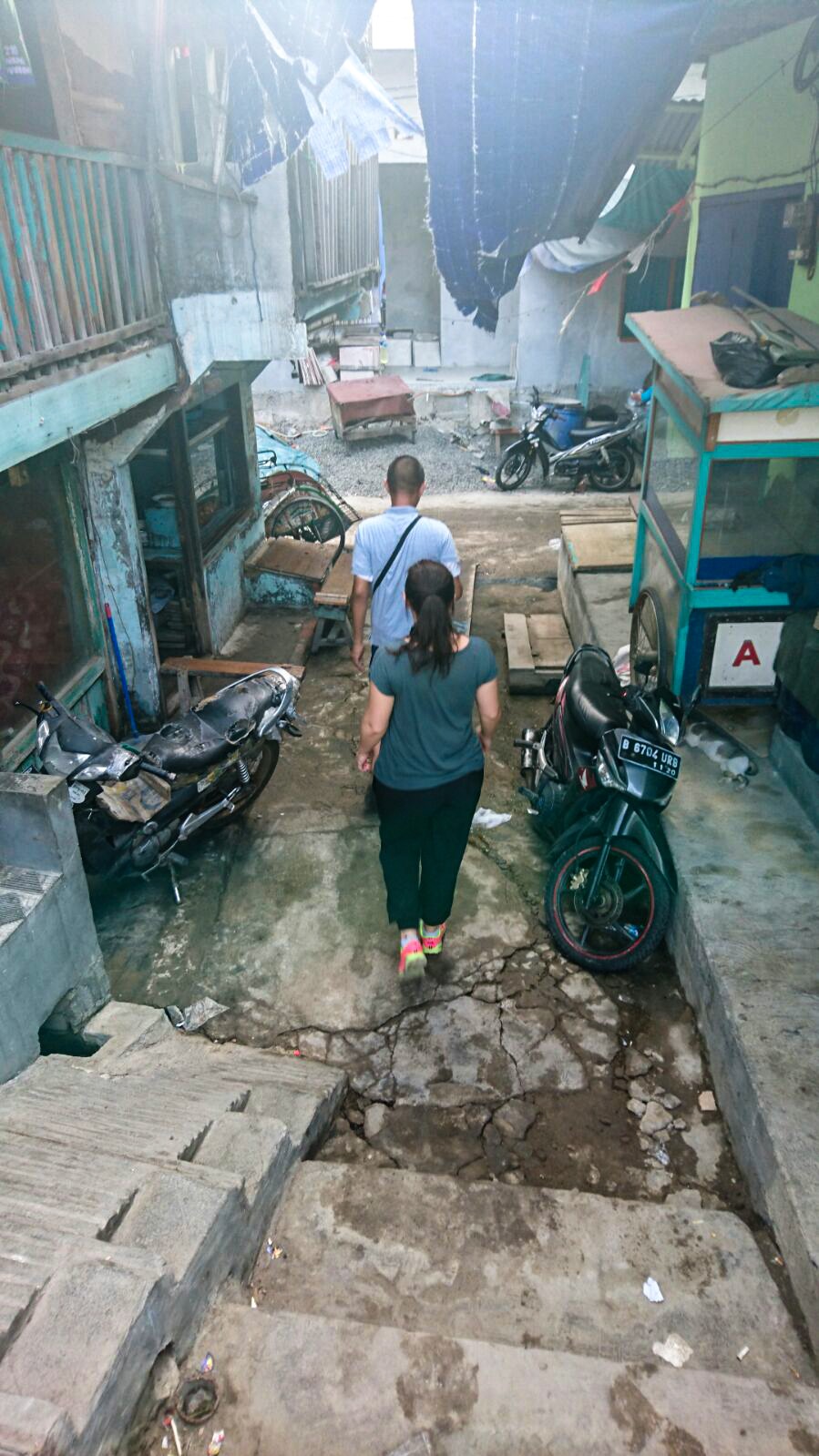
Ducking into a side alley is not something you’d normally choose to do on your own, or in our case, wouldn’t even know it led somewhere. Our guide smiled and greeted a few people as we walked through the long corridor peeking into peoples homes on each side. You see people cooking food on stoves next to a central gutter, another person washing their clothes or feeding a baby, going about their normal lives in the damp, fetid air. We stopped at a door and our guide bids us welcome into a persons home. It’s about 4m x 4m square, no windows, the railway is only a meter above you.
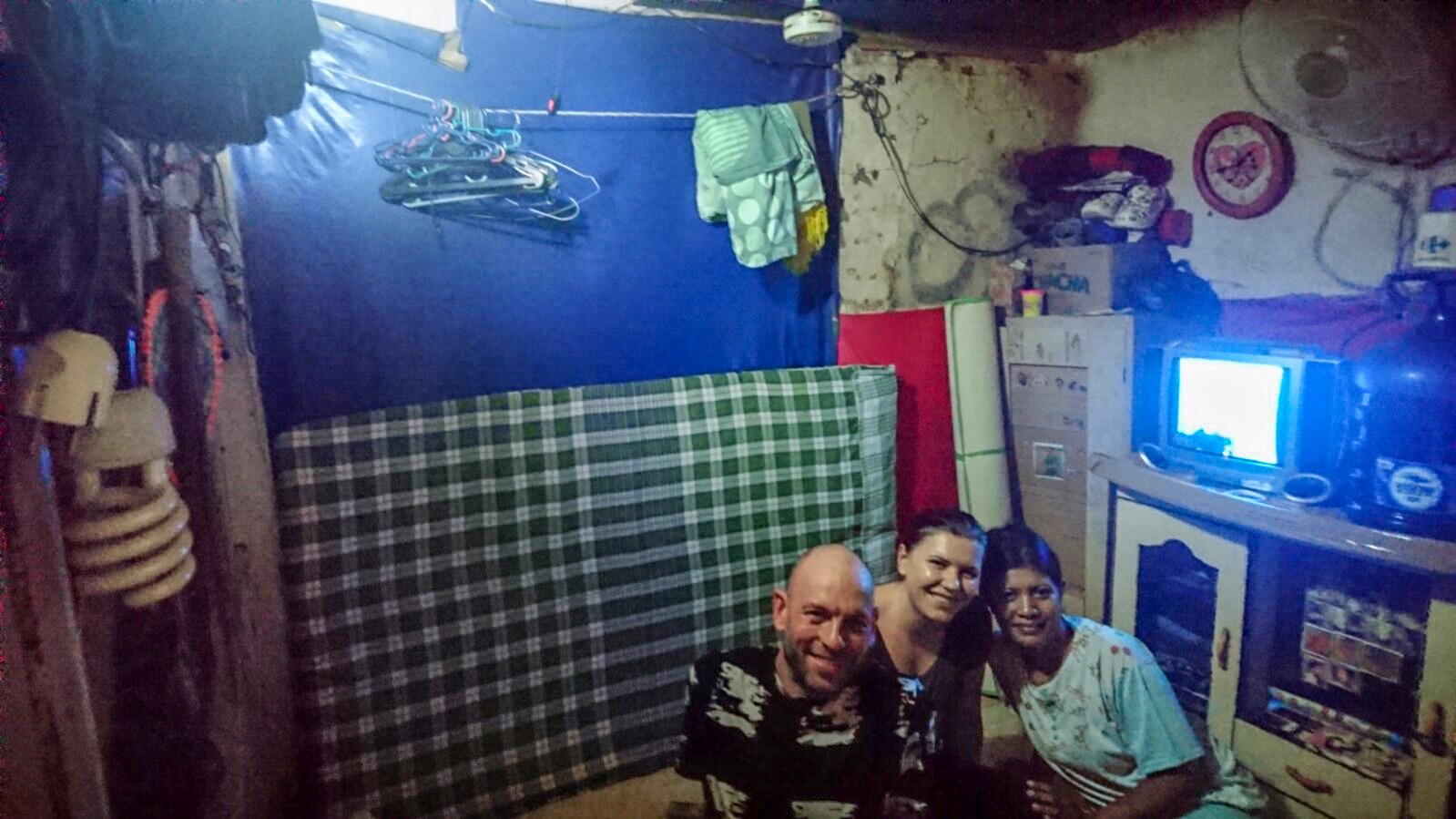
This was our first meeting. She explained to our guide how she lives in this space, her husband earns about $2 a day as a parking attendant nearby. This place is ‘rented’ from a Chinese criminal gang who collect about $30 a month from them. As you can see in the pic they have electricity and a fridge, their possessions are hung around or neatly packed against the wall. The fan blasts 40°c hot air around the room, it’s hot as hell, but we all smile for an awkward turtle moment. Yes the first meeting was a bit awkward for us, as we wasn’t sure how to act. But it got better throughout the tour and we relaxed a bit more.
Small living space under the railway
Back in the dark corridor, we climb one of the ladders and walked along the thin plywood floor/ceiling and past a few doors to sunlight and a gasp of ‘fresh’ air. Before we head back down and onwards to the bridge, greeting mostly women who were chatting or cleaning/cooking and children who are running around playing and being shy when we say hello.
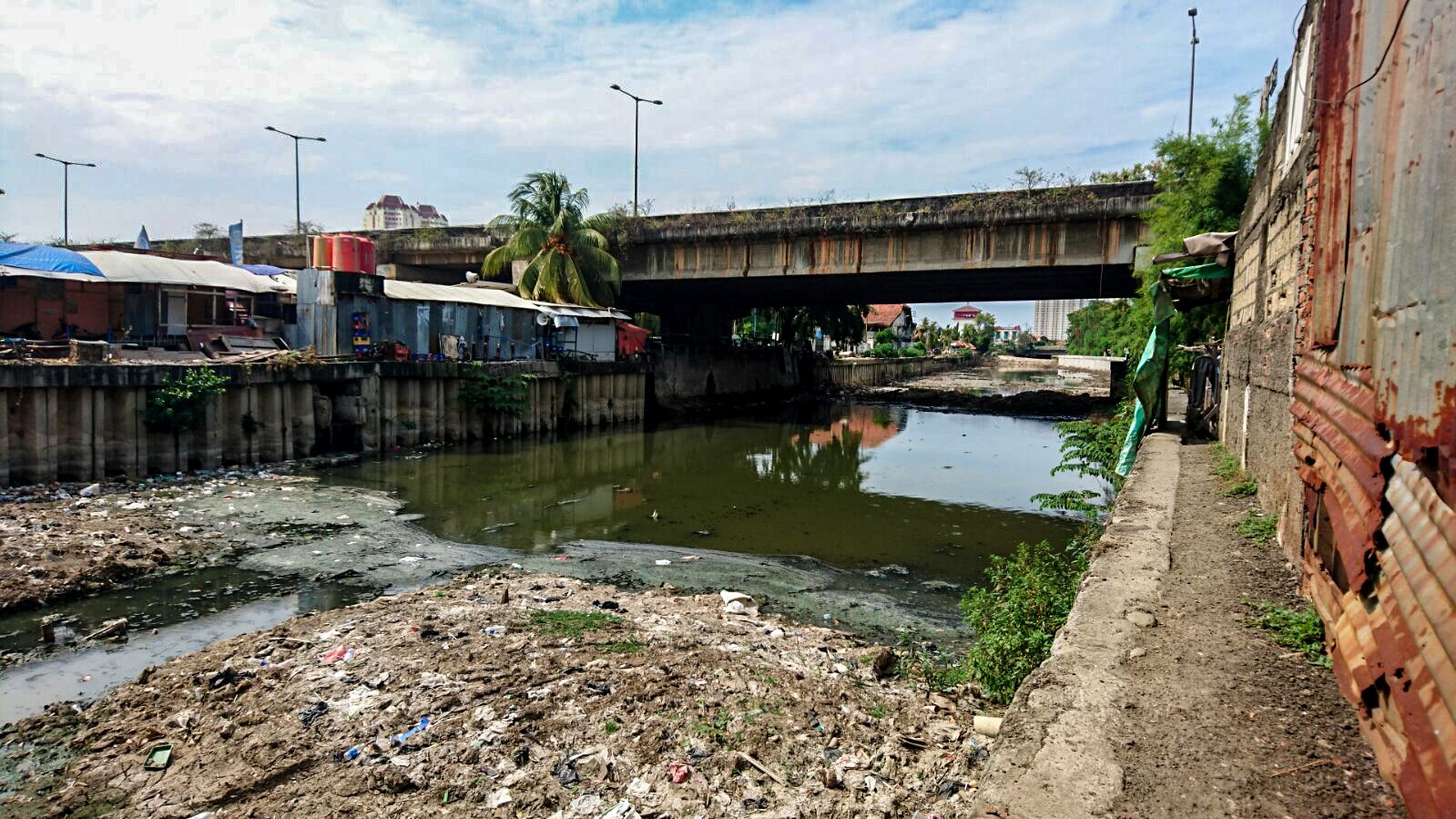
Stinky River – Hidden Jakarta Tour
Boat Trip
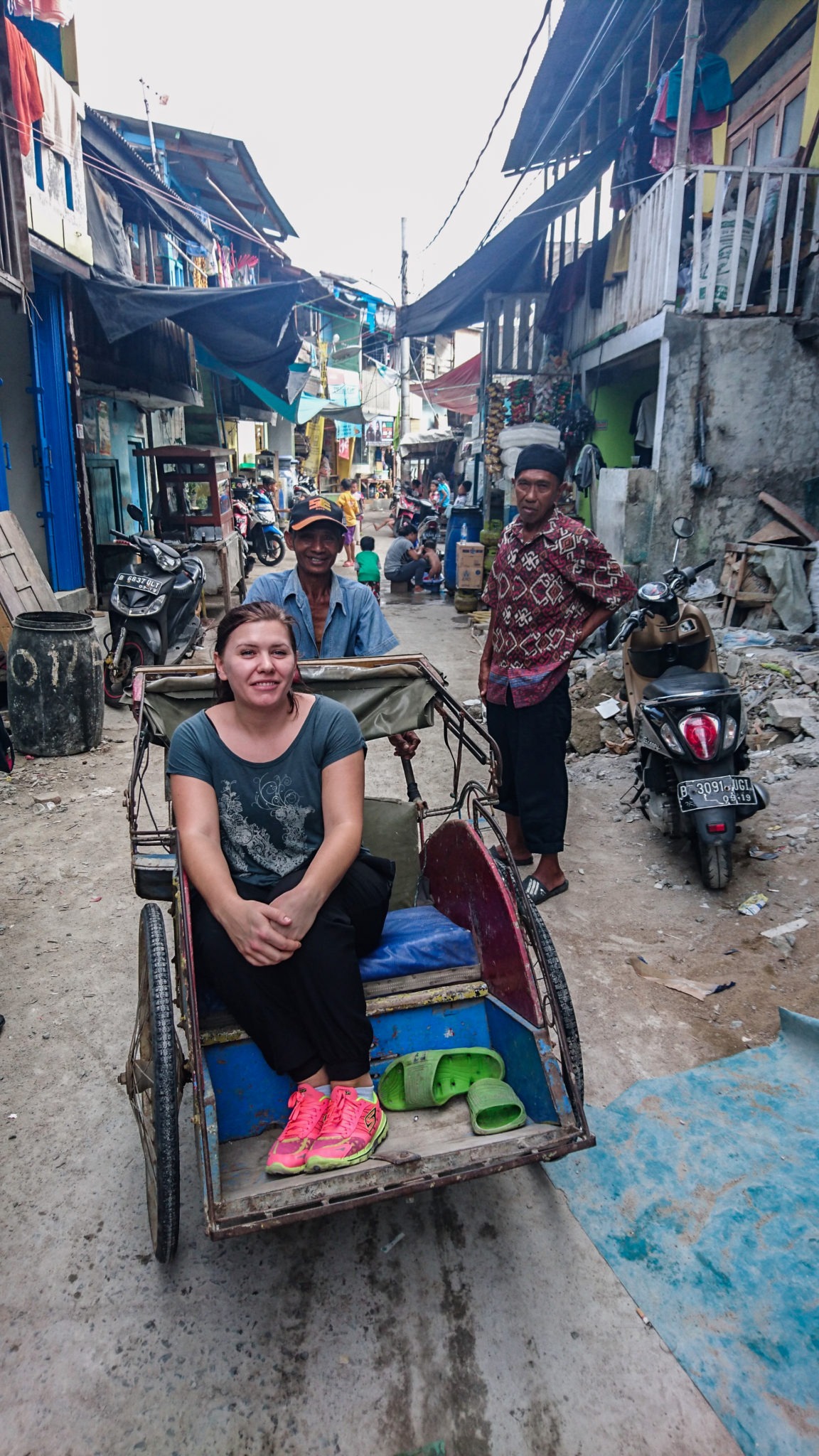
Livia in a bicycle tuk-tuk
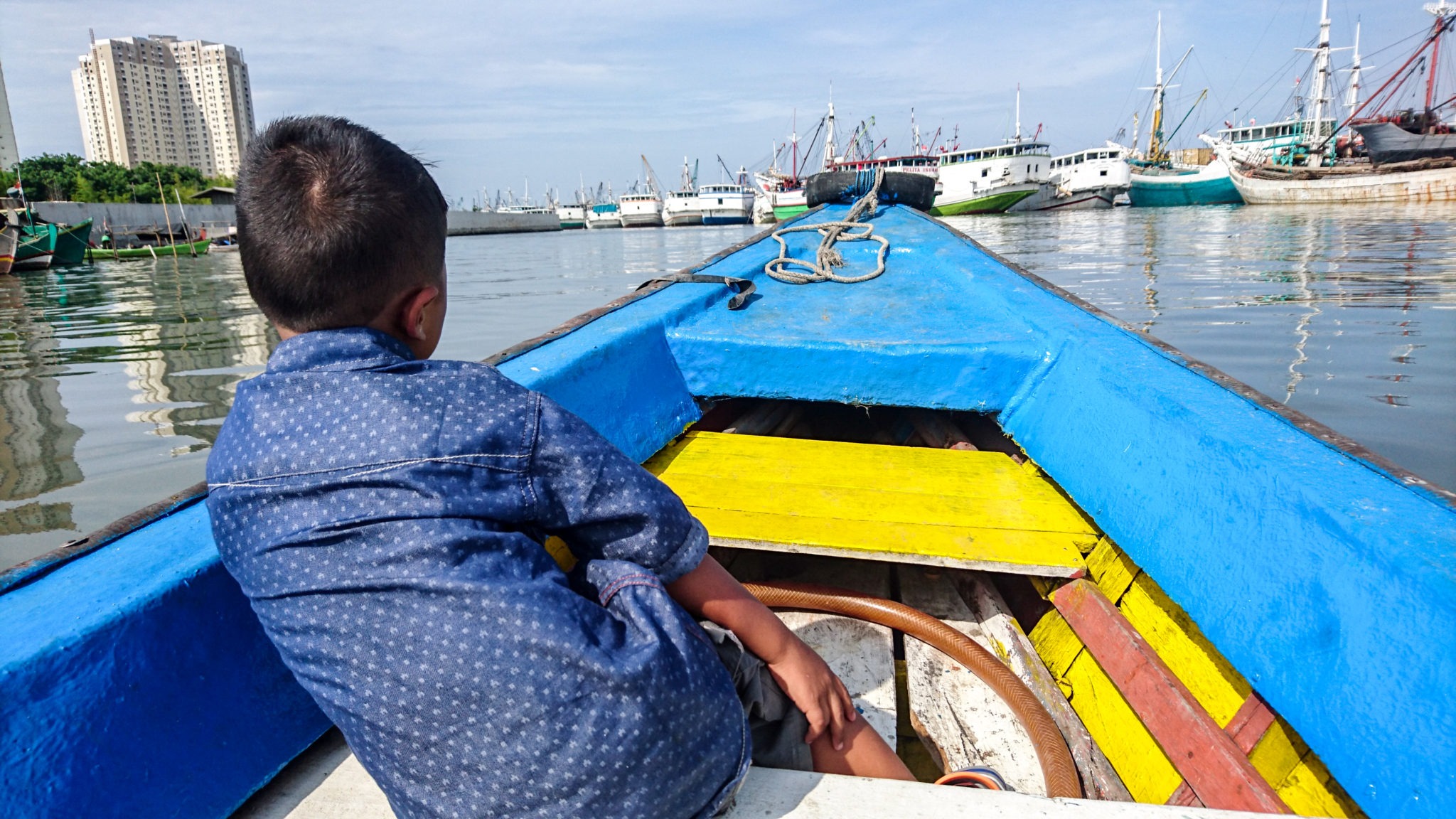
This time we jumped into an bicycle tuk-tuk (illegal in Jakarta, but no one cared in this area) and disappear off towards the docks. This is a very working class, low income area. Our guide had us pulled across the water way by a family working this “ferry”/boat/raft. It was covered from the sun by some tarp with a piece of rope to pull it left or right. One of the family members guided us into a thin wooden boat. His son took us out to the old lighthouse and back with his grandson sitting up front all proud of his new passengers whilst he played on a broken mobile phone. We passed dozens of ships in different states of repair and after about 30 minutes we were out in open water, the old green lighthouse in view and massive container ships dotting the horizon. We headed back feeling slightly smaller in our 4 meter long wooden boat.
Off to the lighthouse in the wooden boat
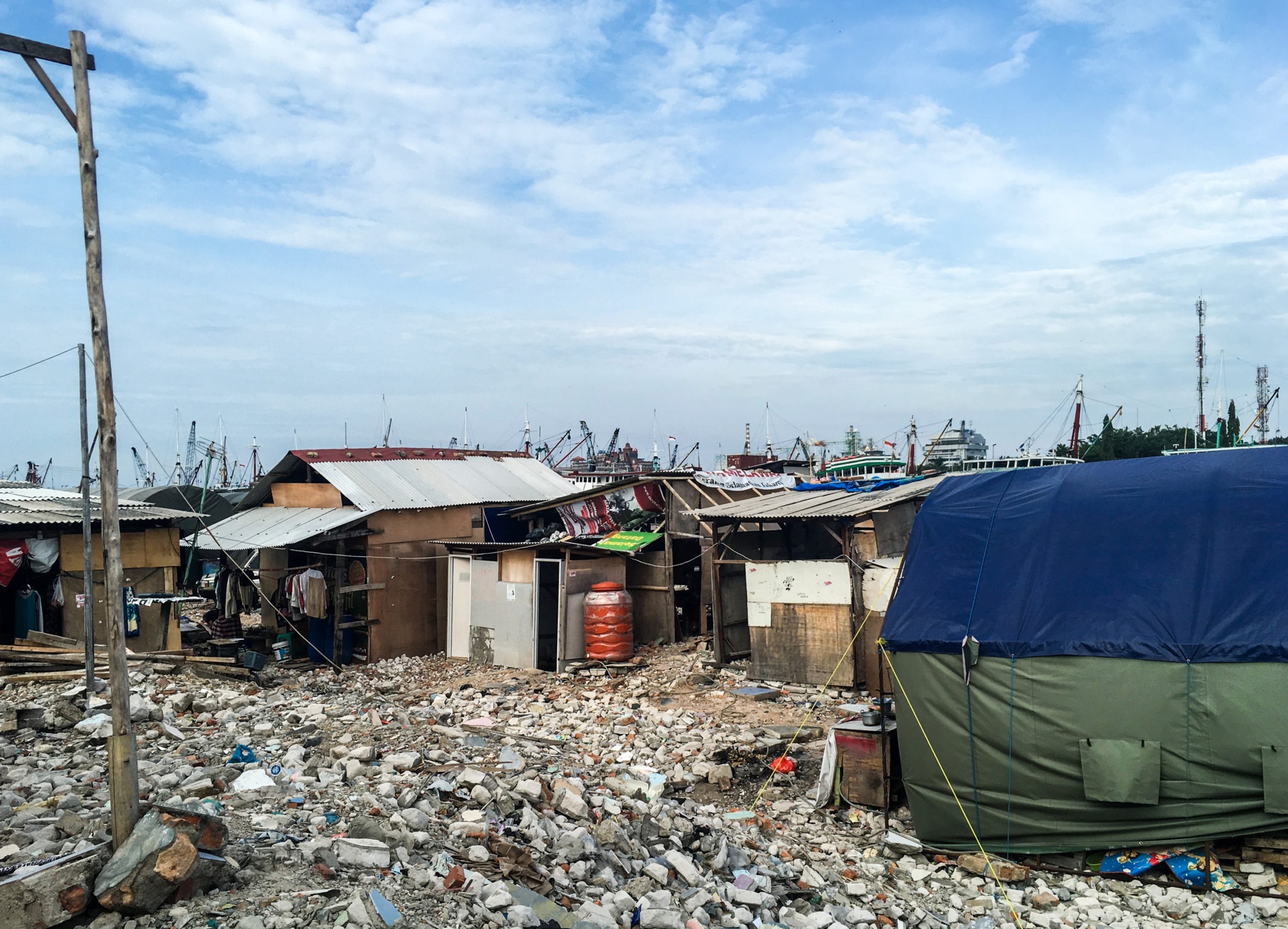
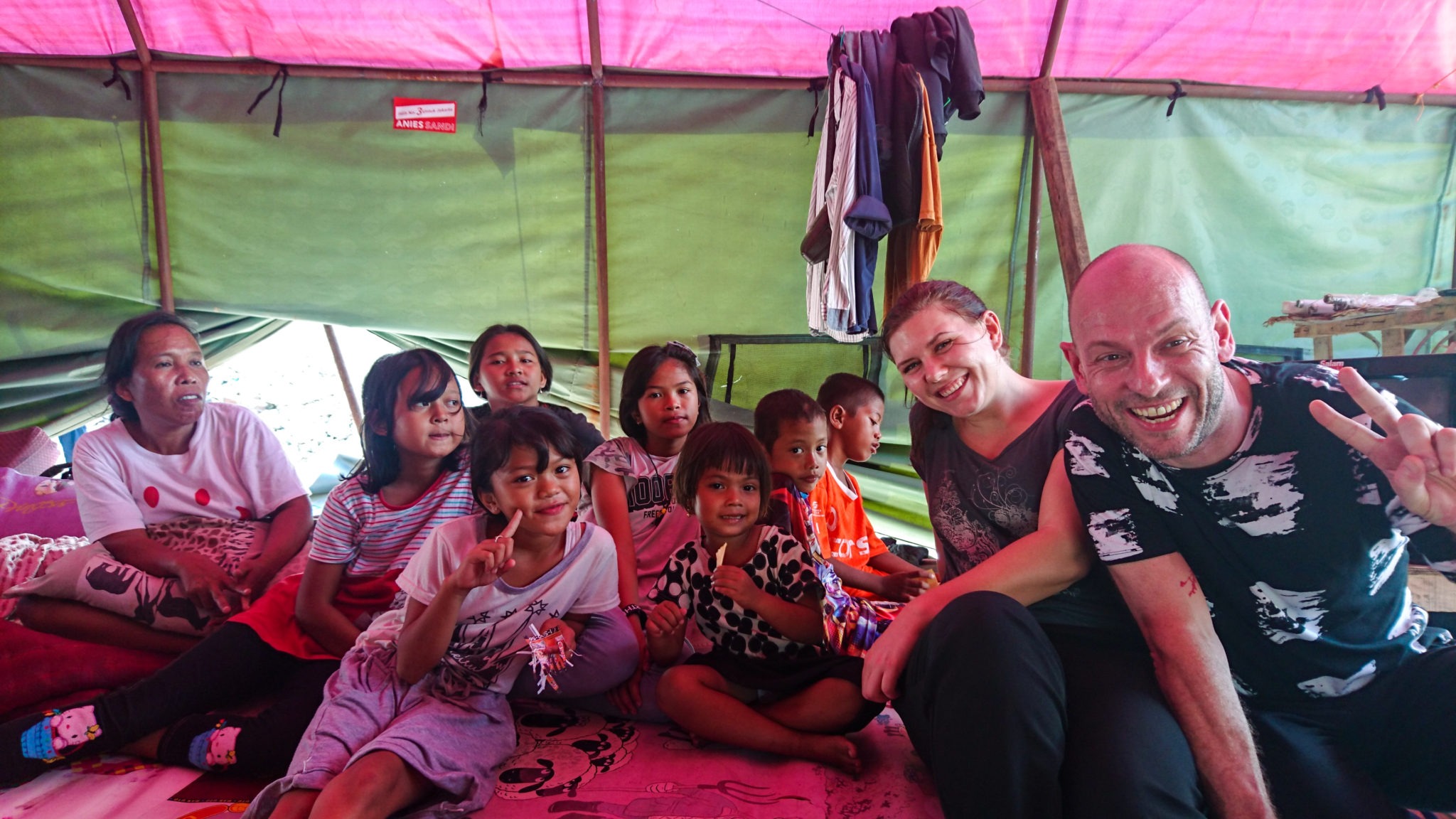
When we arrived back our guide led us out into the wasteland next to the docks. The ground was rubble, bricks, concrete, bits of cable. Dotted across the debris were makeshift tents, built from whatever could be found, tarpaulin, wood, sheet metal, whatever worked. Floors were on stilts, beds were either on the floor or raised where the whole family would sleep together. By family, I mean in this case a woman with six children, her husband works on a cargo boat sailing between Indonesia and the UAE. She see him once every three or so months when he brings her a few hundred dollars after his expenses.
These houses are illegal, in the sense that they’re not allowed to build anything on these grounds. Ever so often the government sends bulldozers to take it all down. And these families have to rescue what they can and start over, once the bulldozers left.
Dockland/Wasteland at the port of Jakarta
We sat down with a family and had a really nice chat with them. We were asked a ton of questions, If we were married, where we live, where we come from, How much we earn? How much we pay for rent?. You quickly realize these are huge almost inconceivable sums of money for these people.
Reflections
Walking through the back streets near the docks in Jakarta
The Indonesian government doesn’t want to admit to this problem. Many Indonesians have never seen these areas. That’s also a reason why we found it important to go. To go here and show that these people matters. That’s an issue in this area, the guide told us that many of the people living here doesn’t think they matter as not even their own countrymen comes here. He continued to explain how happy it made the people here to have foreigners come, just for a small chat. We got so many smiles from people we were passing saying hello, Livia in Indonesian, which made them smile even more.
It hit me hard, it was difficult to hold back the tears once we left the dockland. Us with so much, so “wealthy”, even though we have to work to live and are about one or two paychecks away from being on the street ourselves. But you can’t imagine having to survive like that and still be able to smile. It’s a rough hand to be dealt in life, it makes you tough. You look at the first photo in this post, now look at the last. Its was a sobering experience for everyone.
Family of 8 living on the dock
More Indonesia!
Make sure to see our Indonesia page with tips about travel in Indonesia, map and all our blog posts about Indonesia.