Blog

  • How to Travel in Namibia

    How to Travel in Namibia

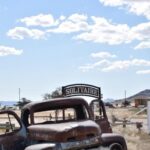
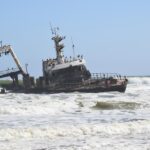
    Namibia is one of Africa’s hidden treasures. If you’re wondering, “Is Namibia good for tourists?”, the answer is absolutely yes! From vast salt pans to desert dunes, Namibia offers a rare blend of natural beauty, adventure, and cultural depth.

    We explored the country on a 9-day safari with Chameleon Safaris, and on a self drive here’s part one about how you can too.

    Why Travel Namibia with Chameleon Safaris?

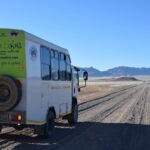
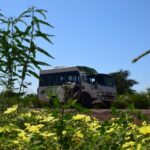
    If you’re new to self-driving in Africa or just want to sit back and enjoy, Chameleon Safaris is a perfect choice. Their 9-day Northern Namibia Adventure covers major highlights and includes transport, meals, accommodation, park fees, and a friendly, knowledgeable guides.

    All we had to do was pack our bags and charge our cameras. They even cater to solo travelers, which is a big plus in Namibia.

    📌 Use code PADDINGTON10 for 10% off your Chameleon Safaris trip!
    Namibia Top 10 Highlights from Our Itinerary

    1. Etosha National Park

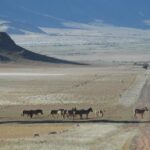
    Etosha National Park is one of Africa’s most remarkable wildlife destinations and an absolute must-see for any Namibia travel itinerary. Covering over 22,000 square kilometers, Etosha is dominated by a massive salt pan so large it can be seen from space. But don’t let the dry landscape fool you, Etosha is teeming with life! We spent 2 days exploring the park’s well-maintained gravel roads, stopping at waterholes where animals gather in breathtaking numbers. We saw elephants cooling off with a muddy splash, herds of zebra and springbok zigzagging across the plains, and even a group of lions lounging in the shade, barely lifting a paw as we passed by.

    What makes Etosha extra special is how close you can get to wildlife without needing a high-end lodge or luxury setup. Even from the back of a safari truck, you’re front row to nature’s greatest show. We spent the night in one of the park’s fenced camps, where rhinos casually strolled up to the floodlit waterhole while we watched in complete silence, hearts racing. Etosha isn’t just a place to tick off the Big Five, it’s a place to truly connect with Namibia’s wild, open soul.

    2. Damaraland in Bloom

    Damaraland is usually known for its rugged, dramatic landscapes and rusty-red desert hues, but after the rains, it transforms into something truly magical. On our visit, we were lucky enough to witness Damaraland in full bloom, a rare and stunning sight. Rolling hills and arid plains were suddenly dotted with bursts of green, and bright yellow flowers lined the roadside like nature had rolled out a welcome mat. The desert elephants may have been hiding, but even without them, the landscape felt alive and full of colour and possibility.

    This temporary greening of the desert brings a softness to the normally harsh terrain, and it’s easy to see why Damaraland is one of the Namibia top 10 places to visit. The sight of Brandberg Mountain rising in the distance, framed by wildflowers and fresh growth, was a reminder of how surprising and beautiful nature can be. If you ever get the chance to visit during this fleeting bloom, don’t hesitate, it’s Damaraland like you’ve never seen it before.

    3. Kolmanskop Ghost Town

    Kolmanskop is one of the most hauntingly beautiful places I’ve ever explored. Once a booming diamond mining town in the Namib Desert, it was abandoned in the 1950s and slowly swallowed by the sand. Today, it’s a surreal ghost town, with sand dunes curling through crumbling doorways and antique wallpaper peeling under the desert sun. Walking through the old houses, post office, and even a once-grand ballroom, you can almost hear the echoes of a time when fortunes were made and champagne flowed.

    What makes Kolmanskop so captivating isn’t just its eerie beauty, but the sense of impermanence it captures so well. Everything here was built quickly and left behind just as fast, giving it a cinematic, post-apocalyptic vibe, some even say it looks like a real-life Fallout set. It’s undoubtedly one of Namibia’s top 10 places to visit and a dream for photographers, history lovers, and curious bears alike. Just remember to watch where you step, the sand gets everywhere.

    4. Sossusvlei and Deadvlei

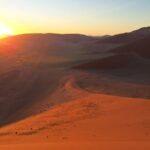
    Sossusvlei is one of Namibia’s most iconic destinations and for good reason. Located in the heart of the Namib-Naukluft National Park, it’s home to some of the tallest sand dunes in the world. I climbed Dune 45 at sunrise, and although my little legs were quite tired, the golden light spilling over the desert made every step worthwhile. The views from the top were breathtaking, a vast sea of orange dunes rolling out in every direction. It’s one of those magical moments that makes you feel very small and very lucky.

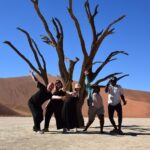
    After the climb, I ventured into the eerie beauty of Deadvlei, a clay pan surrounded by towering dunes and dotted with centuries-old camel thorn trees. These trees, long dead, have been scorched black by the sun but never decompose due to the dry climate. It’s like walking into a painting, with the deep blue sky, red sand, and stark black trees creating a surreal contrast. Sossusvlei and Deadvlei are not just must-sees, they are unforgettable highlights in any Namibia top 10 list, especially if you’re wondering, “Is Namibia good for tourists?” (Spoiler: Yes, it absolutely is!).

    5. Sesriem Canyon

    Sesriem Canyon was a surprising contrast to the towering dunes of Sossusvlei just nearby. Formed by the Tsauchab River over millions of years, this narrow gorge cuts deep into the desert floor and provides a shady, cool escape from the heat above. As I wandered through its winding passageways, the layered rock walls towered overhead like a natural fortress. It’s one of the few places in the area where water can sometimes be found, in fact, early settlers used to tie six lengths of rawhide (called ses rieme in Afrikaans) together to lower buckets into the canyon to collect water, and that’s how it got its name!

    What makes Sesriem Canyon special isn’t just its history or geology, but the peacefulness of being down in the depths of an ancient riverbed. It’s a great place to explore on foot and a reminder that Namibia’s beauty lies not only in its wide, sweeping views but also in the hidden places waiting to be discovered below the surface.

    6. Namib Desert Sunsets

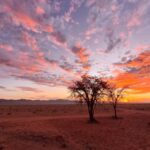
    Namib Desert sunsets are pure magic. As the sun begins to dip below the horizon, the vast desert landscape transforms into a palette of gold, crimson, and soft lavender. The light dances across the towering dunes, casting long shadows and turning the sand into glowing waves. It’s silent, still, and breathtaking,  the kind of moment that makes you pause and just take it all in. For anyone ticking off their Namibia top 10 experiences, watching a Namib sunset is an unforgettable highlight that captures the wild, timeless spirit of the desert.

    7. Swakopmund

    Swakopmund is Namibia’s breezy coastal gem, where desert meets the Atlantic in the most unexpected way. With its German colonial architecture, palm-lined streets, and a laid-back vibe, it feels like a seaside town caught between two worlds. After days in the heat and dust of the desert, Swakopmund is the perfect place to recharge. Think fresh seafood, long walks on the beach, and perhaps even a bit of sandboarding for the brave! It’s a quirky, charming stop that absolutely earns its place on any Namibia top 10 travel list.

    8. Indigenous Culture Encounters

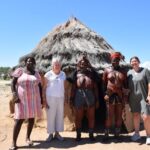
    One of the most enriching parts of any Namibia travel experience is meeting the people who call this vast and beautiful country home. From the colorful dress and strong traditions of the Herero women to the warm welcomes and ancestral ways of the Himba communities, every encounter offers a deeper connection to the land. These moments go far beyond tourism, they’re a chance to learn, listen, and appreciate the resilience and richness of Namibia’s indigenous cultures.

    9. Chameleon Staff

    The team at Chameleon Safaris truly made our Namibia adventure unforgettable. From the knowledgeable guides who shared fascinating insights about wildlife and landscapes to the friendly staff who ensured every detail was perfect, their passion and professionalism stood out. Whether it was helping with logistics or sharing local stories around the campfire, the Chameleon staff added a personal touch that turned a great trip into an extraordinary one. Traveling with them not only made exploring Namibia easy and fun but also brought the whole experience to life.

    10. Chameleon Backpackers

    Back in Windhoek, Chameleon’s own lodge provided a warm welcome, a soft bed, and a cold drink to end the trip.

    What It Cost and Why It Was Worth It

    Our 9-day adventure cost around $2,500 per person, which included nearly everything: accommodation, park entry, most meals, transport, and the guides.

    Just budget a little extra for tips, drinks, and souvenirs. Compared to trying to organize it yourself, it’s incredible value.

    Final Thoughts: Is Namibia Good for Tourists?

    Yes, and not enough people know it yet. Namibia is one of the safest, most scenic, and easy-to-navigate destinations in Africa.

    If you’re planning your Namibia travel, this is your sign to go. Whether it’s Etosha safaris, sand dune climbs, or cultural experiences, this itinerary truly covers the Namibia top 10 highlights.

    Want to experience it for yourself?

    Book with Chameleon Safaris and use PADDINGTON10 for 10% off your next adventure.

    You won’t regret it.
  • Where is the best satay in Yogyakarta?

    Where is the best satay in Yogyakarta?

    Yogyakarta, also known as Jogja, is a vibrant city located in the heart of Java Island, Indonesia. It is a popular destination among tourists, especially food lovers. One dish that stands out in Yogyakarta’s culinary scene is satay, a skewered and grilled meat dish that has been around for centuries. In this blog post, we will explore the history, ingredients, and the best places to enjoy satay in Yogyakarta.

    History of Satay in Yogyakarta
    Satay has been a popular dish in Yogyakarta since the 18th century. It is believed that the dish was introduced to the city by Arab and Indian traders who traded in the area. However, over time, the dish has evolved to suit the local palate, and today, Yogyakarta is known for its unique style of satay.

    Ingredients used in Yogyakarta’s Satay
    The meat used in Yogyakarta’s satay is typically chicken or beef, although pork and goat are also popular choices. The meat is marinated in a mixture of spices, which typically includes turmeric, coriander, cumin, garlic, and shallots. The meat is then skewered and grilled over hot charcoal, giving it a smoky and slightly sweet flavor.

    One of the unique ingredients used in Yogyakarta’s satay is kecap manis, a sweet soy sauce that is made by combining soy sauce, palm sugar, and spices. The kecap manis is often brushed onto the meat while it is grilling, giving it a sticky and caramelized glaze.

    Best Places to Enjoy Satay in Yogyakarta
    There are many places to enjoy satay in Yogyakarta, but some of the best places include:

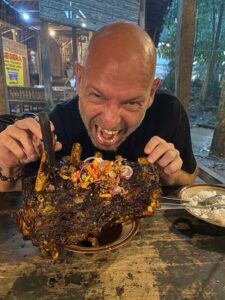
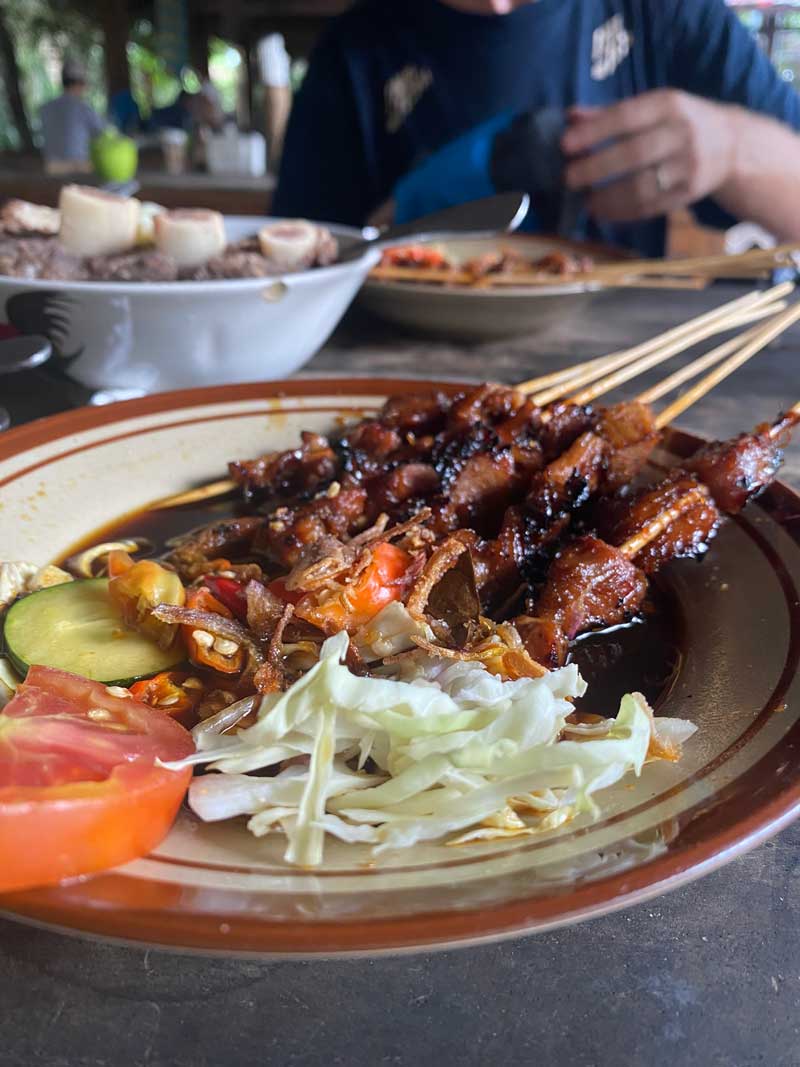
    1. Warung Sop & Sate Sapi Pak Bayu – Perhaps the best satay in Yogyakarta is located in the Sinduharjo area, their specialty is beef satay and one incredible dish they call ‘Dinosaur Ribs’. The meat is of course grilled over charcoal and served with a jus made from the meat and kecap manis (a thick sweet type of soy sauce), service is quick and friendly. The restaurant is located about 30 minutes by taxi north of the city, it’s very well known locally and any driver worth their salt will instantly know the name ‘Pak Bayu’.

    Dinosaur Ribs at Pak Bayu
    Dinosaur Ribs at Pak Bayu

    2. Satay Klathak Pak Pong – This restaurant serves various types of satay, including chicken, beef, goat, and lamb. The meat is grilled over charcoal and served with a special sauce made from coconut milk, lemongrass, and other herbs and spices. The restaurant is located in the Klathak area, about 30 minutes south from the city center.

    3. Ayam Goreng Jawa Mbah Cemplung – Located in the Prawirotaman area, this restaurant is known for its delicious chicken and goat satay. The meat is marinated in a special blend of spices and grilled over charcoal. The peanut sauce served with the satay is made from roasted peanuts, chili, and other spices, giving it a rich and savory flavor.

    4. Sate Kambing Sari Cempe Neng Lia – This restaurant is famous for its lamb satay, which is grilled to perfection and served with a spicy sauce made from peanuts and chili. The restaurant is located in the Tegalrejo area, not far from the city center.

    In my opinion, the best satay in Yogyakarta has to be Pak Bayu, not just for the high quality of the food, but also the traditional atmosphere and friendly staff. Satay is a must-try dish when visiting Yogyakarta, Indonesia. Its unique blend of spices and sweet soy sauce makes it a flavorful and delicious dish that will leave you wanting more. Whether you prefer chicken, beef, pork, or goat, there is a satay joint in Yogyakarta that will cater to your taste buds. So, if you’re planning a trip to Yogyakarta, make sure to put satay on your list of things to try.

    If you want to read more about food in Yogyakarta see our previous post ‘Where to eat in Yogyakarta

  • Hiking To El Salto El Limon (without the guide)

    Hiking To El Salto El Limon (without the guide)

    [et_pb_section fb_built=”1″ _builder_version=”4.17.1″ _module_preset=”default” global_colors_info=”{}”][et_pb_row column_structure=”1_2,1_2″ _builder_version=”4.17.1″ _module_preset=”default” global_colors_info=”{}”][et_pb_column type=”1_2″ _builder_version=”4.17.1″ _module_preset=”default” global_colors_info=”{}”][et_pb_text _builder_version=”4.17.1″ _module_preset=”default” global_colors_info=”{}”]

    Hiking to the El Limon waterfalls is a must do for anyone visiting Las Terrenas in the Dominican Republic

    There are many guided tours available from various agencies, but that is not this guide.

    We will walk the opposite route most tourists take. Apart from two uphill’s, it’s mostly downhill.

    This guide will tell you how to do it all by yourself, it’s quite simple if you have a little map reading knowledge and even better if you can speak a little Spanish.

    Itinerary

    0700 – 0745 Guagua to El Limon
    0745 – 0830 Walk to waterfalls
    0830 – 0930 Enjoy waterfalls
    0930-1030 Walk to El Limon
    1030-1100 Guagua to Las Terrenas

    [/et_pb_text][/et_pb_column][et_pb_column type=”1_2″ _builder_version=”4.17.1″ _module_preset=”default” global_colors_info=”{}”][et_pb_image src=”https://clients.mrmule.com/lbsbworld.com/wp-content/uploads/2022/04/LBSB_EL.LIMON_.DSC_6517.jpg” alt=”Salto El Limon” title_text=”LBSB_EL.LIMON.DSC_6517″ _builder_version=”4.17.1″ _module_preset=”default” animation_style=”slide” animation_delay=”100ms” global_colors_info=”{}”][/et_pb_image][/et_pb_column][/et_pb_row][et_pb_row column_structure=”1_2,1_2″ _builder_version=”4.17.1″ _module_preset=”default” global_colors_info=”{}”][et_pb_column type=”1_2″ _builder_version=”4.17.1″ _module_preset=”default” global_colors_info=”{}”][et_pb_blurb title=”What you will need” use_icon=”on” font_icon=”r||divi||400″ _builder_version=”4.17.1″ _module_preset=”default” header_text_align=”center” text_orientation=”center” global_colors_info=”{}”]

    Phone with Google Maps installed
    $500 DOP
    Drinking water
    A snack
    Sun protection
    Waterproof jacket
    Swimming costume
    A change of clothes
    Towel

    [/et_pb_blurb][/et_pb_column][et_pb_column type=”1_2″ _builder_version=”4.17.1″ _module_preset=”default” global_colors_info=”{}”][et_pb_blurb title=”Duration” use_icon=”on” font_icon=”}||divi||400″ _builder_version=”4.17.1″ _module_preset=”default” header_text_align=”center” body_text_align=”center” text_orientation=”center” global_colors_info=”{}”]

    4 hours total:

    30 minutes drive to entrance

    1 hour walk to waterfall

    1 hour at waterfall

    1 hour walk to exit

    30 minutes drive back

    [/et_pb_blurb][/et_pb_column][/et_pb_row][et_pb_row _builder_version=”4.22.2″ _module_preset=”default”][et_pb_column _builder_version=”4.22.2″ _module_preset=”default” type=”4_4″][et_pb_code _builder_version=”4.22.2″ _module_preset=”default” hover_enabled=”0″ sticky_enabled=”0″]

    [/et_pb_code][/et_pb_column][/et_pb_row][et_pb_row _builder_version=”4.17.1″ _module_preset=”default” global_colors_info=”{}”][et_pb_column type=”4_4″ _builder_version=”4.17.1″ _module_preset=”default” global_colors_info=”{}”][et_pb_text _builder_version=”4.17.1″ _module_preset=”default” global_colors_info=”{}”]

    Get your map!

    Before we begin let’s get your map setup on your phone. It will be useful to have as a backup. We’re going to use the Offline Maps feature as there isn’t always a cellular signal available.

    1. On your phone or tablet, open the Google Maps app
    2. Make sure you’re connected to the internet and signed in to Google Maps.
    3. Search for a place, Salto El Limon.
    4. Tap The three dots (top right) > Download offline map > Download

    [/et_pb_text][et_pb_text _builder_version=”4.17.1″ _module_preset=”default” global_colors_info=”{}”]

    Location, Location, Location!

    Next, while we are in the application, let’s add the locations of where we will be picked up and dropped off by the local guagua.

    [/et_pb_text][et_pb_image src=”https://clients.mrmule.com/lbsbworld.com/wp-content/uploads/2022/04/LBSB_EL.LIMON_.20220324_075619.jpg” alt=”Parrada Guagua” title_text=”LBSB_EL.LIMON.20220324_075619″ _builder_version=”4.17.1″ _module_preset=”default” animation_style=”slide” animation_delay=”100ms” global_colors_info=”{}”][/et_pb_image][et_pb_text _builder_version=”4.17.1″ _module_preset=”default” global_colors_info=”{}”]

    Parrada Guagua – Las Terrenas > Samaná

    [/et_pb_text][dipl_modal modal_id=”mapy” trigger_button_text=”Route Map (pop up)” close_on_esc=”on” modal_title=”Hike to El Limon Waterfall” _builder_version=”4.17.1″ _module_preset=”default” global_colors_info=”{}”]

    [/dipl_modal][et_pb_button button_url=”https://clients.mrmule.com/lbsbworld.com/wp-content/uploads/2022/04/el.limon_.GPX_.zip” button_text=”Download .GPX file” _builder_version=”4.17.1″ _module_preset=”default” global_colors_info=”{}”][/et_pb_button][et_pb_text _builder_version=”4.17.1″ _module_preset=”default” global_colors_info=”{}”]

    I highly recommend you use the MAPY.CZ app for hiking. It usually has all the walking paths and many routes are available straight off the app.

    Mapy.cz for iPhone
    Mapy.cz for Android


    [/et_pb_text][/et_pb_column][/et_pb_row][et_pb_row _builder_version=”4.17.1″ _module_preset=”default” global_colors_info=”{}”][et_pb_column type=”4_4″ _builder_version=”4.17.1″ _module_preset=”default” global_colors_info=”{}”][et_pb_text _builder_version=”4.17.1″ _module_preset=”default” global_colors_info=”{}”]

    Guagua Pickup

    Las Terrenas

    https://goo.gl/maps/agc9ze4kxdeFFSZC9

    The ‘Parrada Guagua El Limon’ outside La Bodega, opposite the cemetary

    Guagua Dropoff

    El Limon

    https://goo.gl/maps/p8r7F2u2yHnzwojv6

    Appx 4km after the town of El limon. Known as ‘Casa Nega’ at the 19km road marking

    Guagua Pickup

    El Limon

    https://goo.gl/maps/AnGJX6esadKvLto16

    The bus stop in El Limon

    Guagua Dropoff

    Las Terrenas

    https://goo.gl/maps/hG7VF4pjL4D3xakQ6

    Cemetery Road 

    [/et_pb_text][/et_pb_column][/et_pb_row][et_pb_row _builder_version=”4.17.1″ _module_preset=”default” global_colors_info=”{}”][et_pb_column type=”4_4″ _builder_version=”4.17.1″ _module_preset=”default” global_colors_info=”{}”][et_pb_divider _builder_version=”4.17.1″ _module_preset=”default” global_colors_info=”{}”][/et_pb_divider][/et_pb_column][/et_pb_row][et_pb_row column_structure=”1_2,1_2″ _builder_version=”4.17.1″ _module_preset=”default” global_colors_info=”{}”][et_pb_column type=”1_2″ _builder_version=”4.17.1″ _module_preset=”default” global_colors_info=”{}”][et_pb_image src=”https://clients.mrmule.com/lbsbworld.com/wp-content/uploads/2022/04/LBSB_EL.LIMON_.20220324_075559.jpg” alt=”Guagua times” title_text=”LBSB_EL.LIMON.20220324_075559″ _builder_version=”4.17.1″ _module_preset=”default” animation_style=”slide” animation_delay=”100ms” global_colors_info=”{}”][/et_pb_image][et_pb_text _builder_version=”4.17.1″ _module_preset=”default” global_colors_info=”{}”]

    Guagua times Las Terrenas > Samaná

    [/et_pb_text][et_pb_image src=”https://clients.mrmule.com/lbsbworld.com/wp-content/uploads/2022/04/LBSB_EL.LIMON_.230825.jpg” alt=”Casa Nega” title_text=”LBSB_EL.LIMON.230825″ _builder_version=”4.17.1″ _module_preset=”default” global_colors_info=”{}”][/et_pb_image][et_pb_text _builder_version=”4.17.1″ _module_preset=”default” global_colors_info=”{}”]

    Casa Nega

    [/et_pb_text][/et_pb_column][et_pb_column type=”1_2″ _builder_version=”4.17.1″ _module_preset=”default” global_colors_info=”{}”][et_pb_text _builder_version=”4.17.1″ _module_preset=”default” global_colors_info=”{}”]

    How to get to El Limon Waterfalls from Las Terrenas (without the guide)

    Part One: The Guagua

    We’re going to start early in the morning for a few good reasons,

    1. Cooler Temperature
    2. Less Tourists
    3. Return for lunch

    The first Guagua leaves Parrada Guagua opposite the cemetery at 07:15am. I highly reccommend you get that one or at the latest the 08:00am one.

    Tell the man who hangs around the stop you want to go to El Limon. He should tell you which guagua it is (when it turns up).

    Tell the driver you want to go to ‘Casa Nega‘  after El Limon. It is at the 19km to Samaná road sign

    The drive will take about 25 minutes. The driver will stop and you should pay $150 DOP per person (correct as of April 2022)

    Cross the main road (careful as you are next to the brow of the hill) You will see the signs ‘Casa Nega‘ and ‘Cascada Del Limon‘. Follow the signs and take the dirt road that leads up the hill.

    [/et_pb_text][/et_pb_column][/et_pb_row][et_pb_row _builder_version=”4.17.1″ _module_preset=”default” global_colors_info=”{}”][et_pb_column type=”4_4″ _builder_version=”4.17.1″ _module_preset=”default” global_colors_info=”{}”][et_pb_divider _builder_version=”4.17.1″ _module_preset=”default” global_colors_info=”{}”][/et_pb_divider][/et_pb_column][/et_pb_row][et_pb_row column_structure=”1_2,1_2″ _builder_version=”4.17.1″ _module_preset=”default” global_colors_info=”{}”][et_pb_column type=”1_2″ _builder_version=”4.17.1″ _module_preset=”default” global_colors_info=”{}”][et_pb_text _builder_version=”4.17.1″ _module_preset=”default” global_colors_info=”{}”]

    How to get to El Limon Waterfalls from Las Terrenas (without the guide)

    Part Two: Hike to the falls

    Walk to the top of the hill, you will notice a small blue and yellow wooden house on your right, opposite on your right hand side you will notice a stile in the fence to the field beyond. Pass through the fence.

    VIEW POINT!
    Just for a few minutes, climb to the brow of this hill for your first view of the surrounding area. Don’t worry, you can see the well trodden path beneath you crossing the field to the left.

    [/et_pb_text][et_pb_image src=”https://clients.mrmule.com/lbsbworld.com/wp-content/uploads/2022/04/LBSB_EL.LIMON_.DSC_6469.jpg” alt=”First Viewpoint” title_text=”LBSB_EL.LIMON.DSC_6469″ _builder_version=”4.17.1″ _module_preset=”default” animation_style=”slide” animation_delay=”100ms” global_colors_info=”{}”][/et_pb_image][et_pb_text _builder_version=”4.17.1″ _module_preset=”default” global_colors_info=”{}”]

    First Viewpoint over the sub tropical rainforest of El Limon in Samaná

    [/et_pb_text][et_pb_text _builder_version=”4.17.1″ _module_preset=”default” global_colors_info=”{}”]

    Walk directly down to the path and keep following it all the way until you hit your first river crossing. It’s shallow and has a small path across it. Immediately after you can turn left and head to the waterfall entrance.

    [/et_pb_text][/et_pb_column][et_pb_column type=”1_2″ _builder_version=”4.17.1″ _module_preset=”default” global_colors_info=”{}”][et_pb_image src=”https://clients.mrmule.com/lbsbworld.com/wp-content/uploads/2022/04/LBSB_EL.LIMON_.route_.072521.jpg” alt=”Hiking Route to El Limon” title_text=”LBSB_EL.LIMON.route.072521″ _builder_version=”4.17.1″ _module_preset=”default” animation_style=”slide” animation_delay=”100ms” global_colors_info=”{}”][/et_pb_image][et_pb_text _builder_version=”4.17.1″ _module_preset=”default” global_colors_info=”{}”]

    Our hiking route from Casa Nega back to El Limon via the waterfalls

    [/et_pb_text][et_pb_image src=”https://clients.mrmule.com/lbsbworld.com/wp-content/uploads/2022/04/LBSB_EL.LIMON_.alt_.065702.jpg” alt=”Altitude Profile” title_text=”LBSB_EL.LIMON.alt.065702″ _builder_version=”4.17.1″ _module_preset=”default” animation_style=”slide” animation_delay=”100ms” global_colors_info=”{}”][/et_pb_image][et_pb_text _builder_version=”4.17.1″ _module_preset=”default” global_colors_info=”{}”]

    Altitude profile of the hike. It’s mostly downhill I promise!

    [/et_pb_text][/et_pb_column][/et_pb_row][et_pb_row _builder_version=”4.17.1″ _module_preset=”default” global_colors_info=”{}”][et_pb_column type=”4_4″ _builder_version=”4.17.1″ _module_preset=”default” global_colors_info=”{}”][et_pb_divider _builder_version=”4.17.1″ _module_preset=”default” global_colors_info=”{}”][/et_pb_divider][/et_pb_column][/et_pb_row][et_pb_row column_structure=”1_2,1_2″ _builder_version=”4.17.1″ _module_preset=”default” global_colors_info=”{}”][et_pb_column type=”1_2″ _builder_version=”4.17.1″ _module_preset=”default” global_colors_info=”{}”][et_pb_text _builder_version=”4.17.1″ _module_preset=”default” global_colors_info=”{}”]

    How to get to El Limon Waterfalls from Las Terrenas (without the guide)

    Part Three: The falls and out

    Now, if you set off on the 07:15am guagua, then there’s probably nobody here to take your money, you enter for free!

    If however you took the 08:00am guagua then you will now pay the entrance fee of $50 DOP. 

    TIP: Regardless, before you descend the stepped path to the waterfall go behind the souvenir shop. You get a view straight down the falls

    Once you reach the bottom you can go for a swim in the pool and enjoy the magnificence of this 40m high waterfall. You can swim right up under the falls which is very exhilarating!

    To leave the falls, cross the small wooden bridge and head further down the path, cross the river and past another smaller waterfall. From here you have a big push uphill to the next viewpoint.

    As the path opens into a green area, on your left hand side you get an amazing view over the falls.

    Head through the makeshift giftshop, past the mule parking and take the left up to the next viewpoint. It’s a little roundabout way so you don’t have to double back, just descend the mountain, cross the river, then wade through the river for 100m and exit where you see the water pump and pipe.

    This exit will take you to the main road (and official entrance to the Waterfalls) Turn right and walk down the main road back to El Limon


    [/et_pb_text][/et_pb_column][et_pb_column type=”1_2″ _builder_version=”4.17.1″ _module_preset=”default” global_colors_info=”{}”][et_pb_image src=”https://clients.mrmule.com/lbsbworld.com/wp-content/uploads/2022/05/DSC_6754.jpg” title_text=”DSC_6754″ _builder_version=”4.17.3″ _module_preset=”default” global_colors_info=”{}”][/et_pb_image][/et_pb_column][/et_pb_row][/et_pb_section]

  • Thanks for visiting

    Hey! We’re Livia & Sam, a Swede and a Brit travelling around the world. Welcome to our travel blog! We’ve been on the road now  since Sept 28 2018! You can find more information about who we are and what we’re doing on our About us page

  • Where to eat in Belgrade

    Where to eat in Belgrade

    We spent just over two weeks in Belgrade and absolutely loved this city! One of the reasons were all the good food you can find scattered around the city. Belgrade is a very diverse city, and so is the food. You find everything here, from traditional Serbian food, to street vendors to really good Asian restaurants to upscale European places. It’s a great city to just walk around and eat along your way. We tried many places and will list our favourites in this guide to where to eat in Belgrade.

    Where to eat in Belgrade for Traditional food

    Zavičaj

    This was one of our favourite restaurants for Serbian food. It’s located in Savamala, close to the bus station, so it’s easy to get to, kind of in the middle of everything. The atmosphere is great and the food super yummy. The beer comes in clay mugs, which is a nice touch. It’s maybe a little bit touristy, but the food is still really good, and prices not too high.

    Question Mark

    This is supposedly the oldest restaurant in Belgrade. The atmosphere is great, and even if it’s kind of touristy we had a great meal here. A little but more pricey than Zavičaj. It’s centrally located just off the walking street.

    Tri Šešira

    This is a very touristy restaurant in Skadarilja, but the food was good. It’s a famous place so many of the nearby restaurants has similar names, so make sure to go the right one.

    Where to eat great Asian food in Belgrade

    中华食府 X.WANG’S KITCHEN

    This was our favorite place in Belgrade, not sure how many times we went here. It’s a Chinese family serving amazing Chinese food. Our favourite was Sichuan beef – it’s a huge portion so you can share it between a few people, just add rice and maybe a few side dishes. It’s centrally located in Savamala so easy to get to.

    Wok Republic

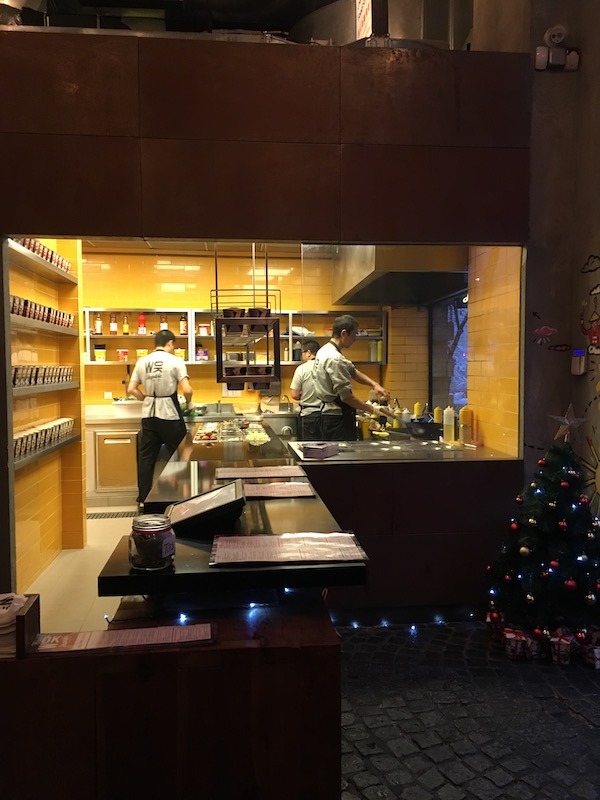
    This is a fast food place, but it has a sit down area and is a very cool spot. If you’re looking for cheap good noodles, this is perfect. Loved this place and went a couple of times.
    The cool Asian street style interior at Wok Republic

    MOON Sushi & Fusion Food

    Our server told us this place was the first Sushi restaurant in Belgrade. It’s really good food, and the staff is super friendly, it’s on the expensive side, but definitely worth a visit.

    Where to eat great Western food in Belgrade

    Homa Bistrot

    Great local restaurant close to Saint Sava church. They’re serving Serbian and western/European dishes. Everything is very well cooked and tasty. This is where families goes for their Saturday lunch, so either go another day or make a reservation. We managed to walk in on a Saturday and get a table for 5 people.

    Fat Boys Food co.

    One of the best burgers we’ve had. These burgers are absolutely amazing – it’s not the cheapest burgers, but definitely worth the price! Even if the portions are huge and you will be super full after leaving – you won’t regret it!
    The restaurant is located in the up and coming hipster neighbourhood Dorcol so there’s lots of cool cafes etc. nearby to discover too.
    Definitely not the place for diet!

    Andrea Mia

    This is a super nice restaurant on the river in New Belgrade. They serve some really good pizza, for super good price. This is also a very nice area to walk around in next to the river, a beautiful part of New Belgrade.
    The area where Andrea Mia is located.

    More Serbia!

    Make sure to see our Serbia page for all our travel tips, travel map and all our blog posts about Serbia.

  • What to do in Niš

    What to do in Niš

    Our first stop in Serbia was Niš. A city in the southern part of the country. I’m not going to lie to you, this was not our favourite stop on the way. It’s a very industrial run down city, and we went through some very grim towns and places on the bus on our way to Niš. However, there are a few interesting places to visit in Niš and if it’s on your way it might be worth a stop.

    We only spent three nights in Niš, which was more than enough and we didn’t do too much either as we found this city quite grim. It might have been because we came on a grey day in December tho.

    First views of Niš

    You can see all places below added to our Serbia travel map.

    What to do in Niš

    Old Fortress

    This is more of a park within old fortress walls. It’s a nice part of the city with a few historical sights. It’s a great place for a stroll, if you go on a Sunday you will be joined by many locals. There’s a few cafes and a small petting zoo as well.

    Cost: Free of charge.

    Entrance to the Fortress


    Inside the fortress area

    Market

    Next to the Fortress entrance there is a local market, mainly selling vegetables but there’s also a few stands selling souvenirs and local handicrafts.

    Crveni Krst/Red Cross Concentration Camp

    Niš has a pretty dark history, and one place to show it is the old concentration camp from WWII. This is an important bit of the European history, and even if it was extremely hard to visit it’s definitely a must go place in Niš. We had no idea that there were any concentration camps in Serbia, but apparently there were a few, in this one mainly Serbian “communists”, jews and Romani were held, most never to get out again.

    A very emotional, but important place to visit

    Skull Tower

    Another mark of Niš dark history is the Skull Tower, we never had the chance to visit unfortunately as it was closed while we were there. But it seems like an interesting place. It’s a stone structure embedded with human skulls from a battle agains the Ottomans.

    Visit Kazandžijsko Sokače/Tinkers Alley

    This street is full of cafes, bars and restaurants. Join the locals at one of the many cafes here.

    Where to eat in Niš

    Dve krigle pivnica

    This place was highly recommended by our host, so we went. It’s a great local bar serving beer and chicken wings by weight. Super busy, cheap and cheerful! Perfect for a night out.
    Galija

    Traditional Serbian restaurant. Huge portions, a bit touristy but still quite good if you want to try some local favourites.

    More Serbia!

    Make sure to see our Serbia page for all our travel tips, travel map and all our blog posts about Serbia.

  • What to do in Skopje

    What to do in Skopje

    Our second and last stop in North Macedonia was Skopje. We didn’t know what to expect and was quite surprised by this eclectic city. Skopje pretty much has it all, historical old town, brutalist architecture and a renovated city centre filled with sculptures. And when I say filled, I mean they’re everywhere! More on this later.

    We spent a week in Skopje, rented a AirBnb close to the centre and really enjoyed our time here. It was also the cheapest capital we visited during our trip through balkan.

    You can find everything in Skopje

    You can see all places below added to our North Macedonia travel map.

    What to do in Skopje

    Stari Grad

    The old bazaar/old town in Skopje. Not the nicest old town compared to other countries in Balkan, but still worth a walk around. It feels more liveable than other old towns we visited, more local restaurants and cafes and not only tourist traps. This is probably because North Macedonia doesn’t see many tourists.

    Old town in Skopje

    Go on a brutalist architecture walk

    There’s a lot of brutalist architecture in Skopje. So if you’re into architecture and in this case quite bizarre architecture, Skopje is a good place to go. A few places to see are:

    Undergraduate Dormitories ”Goce Delcev” : student housing building.The Macedonia head

    Undergraduate Dormitories

    Post office: another good example of brutalist architecture in Skopje

    Other than that, just walk around in the outskirt areas as there is no brutalist architecture in the centre anymore. Also make sure to check it out soon, as its quickly disappearing.

    Street art

    Sam is really into street art, and Skopje is a pretty good place for it. There’s a few areas where there’s a lot of it. One of these areas is the Autonomous Cultural and Social Center, it’s a bit tricky to find, but you don’t have to find the actual place, just the block of buildings around there. And there’s some nice art. There was also some nice street art in the area between the arena and the city park. The third place we went to see street art was the wall by the walk way along the river. There’s loads of street art around there.

    Street art by the Autonomous Cultural and Social Center
    Old building filled with Graffiti by the stadium

    Go to an Abandoned factory

    We do love abandoned buildings/places. There’s something so special about them. There was a graffiti shop next to our apartment, so we asked the owner where we could see the best graffiti and he told us about this abandoned factory on the edge of the city (see our North Macedonia map for exact location).

    So we walked down there, it was super easy to get into the factory area. Inside the area there’s a few buildings, some completely fallen apart, others still quite intact. We didn’t go into any buildings though as we weren’t sure how safe they were.

    It was a really cool experience and some beautiful photo opportunities. I really find abandoned places beautiful in a weird way..

    However, there was a man there, who didn’t speak any English. Afterwards the guy in the graffiti shop told us there are a few people living there, but they’re harmless. But as we didn’t know if this guy was dangerous or not we kept away from him a bit, especially since we couldn’t communicate. When he picked up an axe and started to walk around, we left quickly.

    Disclaimer: no abandoned buildings are safe to visit. There was loads of glass and the buildings were half falling apart. Also, it is illegal to break an entry, so go at your own risk.

    Count all the statues

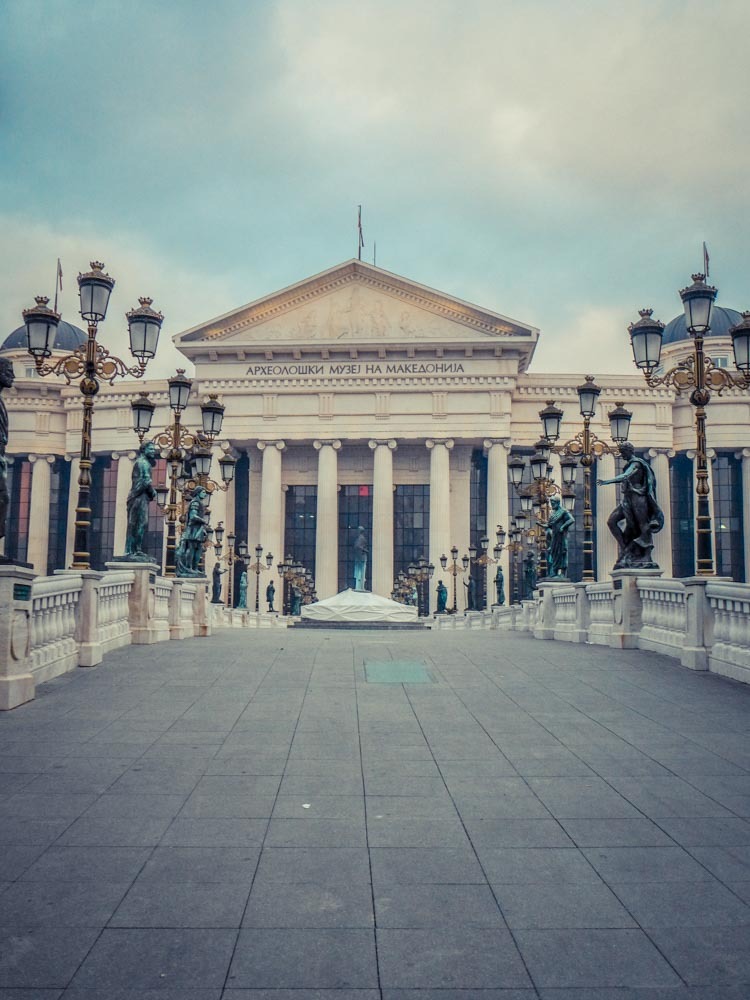
    As I said, there is so many statues in the city centre. This was part of Skopje 2014 a project founded by the Macedonian government to make Skopje look nicer and give it a more classical appeal. The project included building museums and government buildings, but the most famous bit of the project it all the statues. Skopje 2014 has got a lot of criticism and it polarised the people, some liking the redevelopment and some thinking the money should’ve gone to other, more important things. The budget was set at 80 million euros but got blown up to over 500 million euros.

    How many statues do you see?
    Pirate ship in the city

    The actual number of statues is unknown but there are hundreds of them. And it has become a trouts attraction in itself. It is very bizarre to walk around the centre of Skopje, with all these old looking buildings (that are actually newly built) and all these statues, some of historical people, some just weird. And then there’s 2 pirate ships in the river. It is a strange place. I preferred other parts of the city.

    Mother Theresa museum

    Where to eat in Skopje

    We cooked a lot ourselves in Skopje, especially dinners. So we didn’t try that many restaurants, but we have a couple to recommend.

    Kafana Gostilnica Ka

    We went here a couple of times. A great little BBQ place serving traditional food for very affordable prices. This is out of the city centre (still central) so it’s a local place.

    Turist Grill

    I hate the name of this one, but it’s a good BBQ place to eat a cheap Cevapi in old town.

    More North Macedonia!

    Make sure to see our North Macedonia page for all our travel tips, travel map and all our blog posts about North Macedonia.

  • What to do in Ohrid

    What to do in Ohrid

    We initially planned on staying a couple of nights in Ohrid, but kept on prolonging it and ended up staying for a week. We both fell in love with this little city situated by lake Ohrid. We stayed in an apartment just in the city centre close to the water, and enjoyed walks along the lake, walking around old town and just drinking coffee in the fall/winter weather.

    We were in Ohrid late November/early December, it was very low season, but we really enjoyed it. It wasn’t full of tourists, the weather was a bit mixed, we had some rainy days, but also a few beautiful sunny days where we could sit outside at cafes by the lake. The only downside might have been that a lot of places in the old town was closed, but we didn’t really mind this as it’s mainly touristy places anyway. Coming to Ohrid off season you really get to experience the local life of the city.

    How magical is this place?

    There really is some magical about Lake Ohrid and I would love to come back to explore more of the area around it.

    Views over the lake

    What to do in Ohrid

    Ohrid is a small place, but we still found plenty of things to do around the city.
    All places are added to our North Macedonia travel map

    St. John church

    This is probably the most famous spot in Ohrid, a beautiful old church located on a cliff by the lake. It’s magical. I can imagine it being full of tourists in the summer months, but we had the place to our selves most of the time, or maybe one other couple. It was great!

    Walking bridge

    There is a small walking bridge on the lake between the old town and towards St. John Church. We walked here many times to see the magical light over the lake. There’s also a few restaurants along here with beautiful views over the lake.

    @abearcalledpaddington enjoying a walk on the bridge. I had to add a pic with Paddington as we forgot to take a photo without him here!
    Also a good place for photos

    Walk around Ohrid Old town

    We didn’t spend that much time in the old town, as most places were closed. But we did walk around there to see all the sights. There’s loads of places to see and lots of beautiful old houses.

    Small alleys in old town

    One place in the old town is the Ancient theatre, this was a pretty peaceful place to be at (at least in low season), and there were also a family of stray dogs that we took care of a bit while we were in Ohrid. So if you pass by, please check if they’re ok, and bring them some food and give them love.

    The dog family we visted almost daily

    Green market

    There’s a pretty big green market in Ohrid which is nice to walk around. We got to taste lots of stuff and bought cheap vegetables to cook with. If you’re like us and love markets, this is worth a visit.

    Surrounding area

    There’s a lot of places to visit in the surrounding area of Ohrid as well, view points for mountains, old churches and small towns. However, we didn’t do this as we didn’t have a car and was happy with just exploring Ohrid.

    Where to eat in Ohrid

    We were quite surprised by the number of good restaurants in Ohrid. And the amount of restaurants. We enjoyed a lot of good food here, and most places were also super cheap, which is a nice bonus. Here’s a list of a few places we can recommend.

    Македонска софра

    This was out first meal in Ohrid, and we came back a few times after that. There is no English name for the place, and it’s super local. The people in there seemed quite surprised when we walked in. In the winters they have a semi outdoor area (in a tent) with fireplaces to make it warm. They served super yummy local North Macedonian food for a low price.

    The BBQ street

    There is a street close to the green market with only BBQ restaurants on it. We went here a couple of times to eat in a few different places. They all serve the same kind of food, balkan grill. We can recommend Brioni 2008 and Кебапчиница АДАНА, which both have nice food for a good price.

    Кебапчиница АДАНА was super busy during lunches on weekends, filled with local people who enjoyed grilled meat and salads. This was probably our favourite between the two.

    Restaurant Delikates

    There’s a lot of Greek food in North Macedonia, especially in the areas close to the border. This little greek restaurant in Ohrid was great. We enjoyed lots of food and wine here one rainy afternoon, and the owners were super sweet and helpful. It was also very cheap.

    Kaneo Restaurant

    This is by the lake next to St. John church. We thought it would be super touristy, which it might be, but it’s also very good quality food. A little bit expensive, but if you can splurge for a meal, this would be the place.

    More North Macedonia!

    Make sure to see our North Macedonia page for all our travel tips, travel map and all our blog posts about North Macedonia.

  • How to cross the land border between Albania and North Macedonia by foot

    How to cross the land border between Albania and North Macedonia by foot

    One of our most googled items during our travels through balkans was how to cross land borders between countries. Most of them were pretty straight forward, especially since we were on busses who knew which borders are open for foreigners etc. However, at one point we had to cross the border by foot, as there were no bus services between our to destinations. This was the border between Albania and North Macedonia. As there wasn’t a lot of updated information around we thought we’d share our story of how to cross the land border between Albania and North Macedonia by foot.

    Our last stop in Albania was Korçë, and from there we wanted to go to Ohrid in North Macedonia. There are different borders to cross between these two countries, but the one that made most sense for us was the Tushemisht – St. Naum border (you can see it marked on our Albania travel map and North Macedonia travel map). We quickly realized we had to do this in steps, and also cross this border by foot.

    How to cross the land border between Albania and North Macedonia by foot

    Step 1: Korçë to Pogradec

    From Korçë we jumped on a bus to the small town Pogradec. Which is also a quite popular place to stop for a few days, as its just on Lake Ohrid, which is shared between North Macedonia and Albania. But we had decided to head straight to Ohrid. The busride was about an hour and only cost us 150 lek each and there was a bus every hour, so this part was really easy.

    Happy Sam on the first part of our border crossing

    Step 2: Pogradec to Tushemisht (Albanian border control)

    From Pogradec to the actual border we had no choice than to take a taxi. You could walk, but it is quite far from the town where the bus stops and we didn’t find any busses going that way. There is probably some local bus going that way, but since the 15-20 minute taxi is only 700 lek it was just easier to catch one from the bus stop in Pogradec. Pogradec is also where you want to get rid of all your Lek (but save enough to pay the taxi!!) since there’s nothing by the border control.

    Step 3: Tushemisht border control (leaving Albania)

    Arriving at the border control there was a few cars asking if we wanted a taxi somewhere, but since it would be quite expensive to go all the way to Ohrid from there we had already decided to walk over the border and catch a bus on the other side.

    The Albanian border control here is situated right on the lake, so you have beautiful views from here. Normally  that wouldn’t really have mattered, but when we arrived the computers were all down so we had to wait for 30 minutes or so before we could cross the border and leave Albania.

    The crossing itself was really easy once the computers were running, they even had a walking lane in addition to the car lanes. It was also very quick. I’m not sure about the opening times, but during day time you won’t have any issues, and if you cross by foot you will want to do this at day time since it is quite a lot of walking included.

    The walk in between the two border controls

    Step 4:  St. Naum border control (entering North Macedonia)

    This was the only border  where the two border controls were quite far from each other, we had to walk for about 10-15 minutes along a road before even coming to the North Macedonian border control. However, the walk was nice and we were lucky with the sun.

    This border control was probably the hardest one of all borders we crossed in Balkans. First we had to queue up with the cars as there was no walking lane, and even if it just was 2 cars in front of us it took quite some time as they checked papers very, very throughly.

    After having our passports checked we had to walk to 2 other people who asked us lots of questions. Or actually they asked Sam lots of questions, they just looked at my passport and said “ah Swedish, welcome”. However, Sam, not sure if it was because he’s Brittish, got loads of questions, such as “Why are you here?”, “How long did you spend in Albania?”, “How long will you spend in North Macedonia?”, “Where are you staying in North Macedonia?”, “Are you carrying any drugs with you?” etc. etc. It was quite a difference between how they welcomed me and Sam. But after all the questions we were allowed to enter North Macedonia.

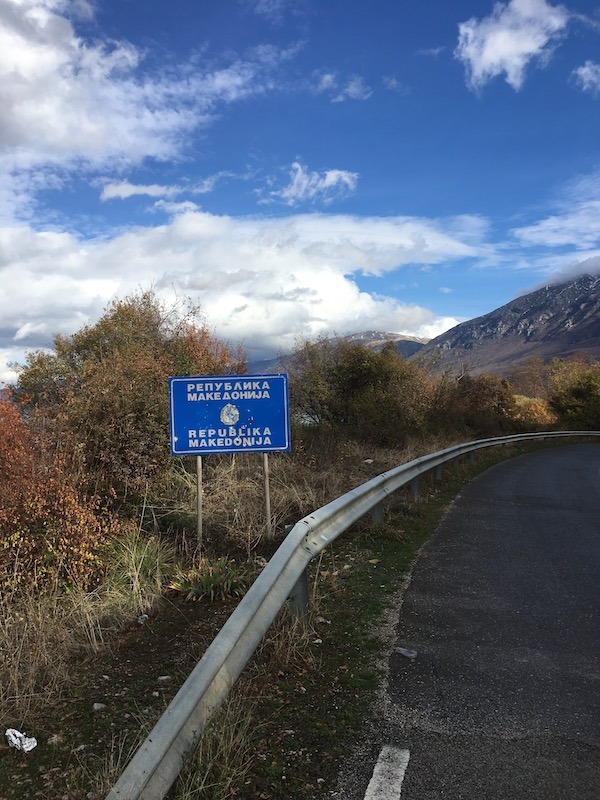
    Welcome to North Macedonia

    Step 5: Walking from the border to St. Naum

    This bit was quite a miss on our part, we hadn’t really realized how far it was to walk from the border control to the nearest bus station in St. Naum. There is also some military zones that you’re not allowed to enter. Our biggest tip for this part is to have downloaded any type of map, as you most likely wont have internet when you’ve enterd North Macedonia and it’s not just to follow the road.

    To start with you will follow the asphalt road leading from the border control, however, at one point you will want to head into a little path on the left (there is a small signpost for a church ‘✝’) through the forest/nature area as this is much closer than following the road the whole way. This little path is not really marked except for the little sign post, so this is where you will need your downloaded maps. There is also military zones in this area which you need to stay clear from.

    After some discussions we did find the path. Sam has a backpack so he had no issues walking here, however, my bag is a rolling bag.. this is an issue on this road as its just a path with grass and mud. I can tranform my bag into a backpack, but it’s too heavy for me… Anyway, in the end we found the way and got to St. Naum after a 30ish minute walk.

    If you don’t want to carry all your luggae it might be worth taking a taxi or cross the border on the north part of Lake Ohrid where you can go by bus.

    Step 6: St. Naum to Ohrid

    St. Naum is supposed to be a beautiful place for a stop. However, we skipped it as we didn’t want to carry around our bags anylonger so started walking towards the bus station, which is situated just outside the entrence to the St. Naum area.

    The bus takes about 1 hour and should cost 100 denar per person. But, if an older man stops in a car and asks if you want to ride with him instead, take the oppotrunity. Not sure if more than one man does this now, but the one we went with is a retired proffessor and drives tourists between Ohrid and St. Naum for the same price as the bus, as a way to get a little bit more money. I had actually read about him on a blog before going, otherwise I’m not sure if I would have taken the offer. But we did, which was great – as it didn’t cost us more and was much quicker than the bus. He dropped us off close to our AirBnb in Ohrid, I think you can ask him to drop you anywhere as long as it’s not a detour.


  • The most beautiful cities and towns in Albania that you have to visit

    The most beautiful cities and towns in Albania that you have to visit

    Albania is a beautiful country, blessed with amazing nature, mountains and good food. One thing I did not expect in Albania was all the picturesque and historical towns and cities. I was blown away time after time visiting some of these places. It is such a underestimated country that should go on more people’s radar, or maybe not, to keep the charm. Either way, this is our list of the most beautiful cities and towns in Albania that you have to visit:

    Gjirokaster

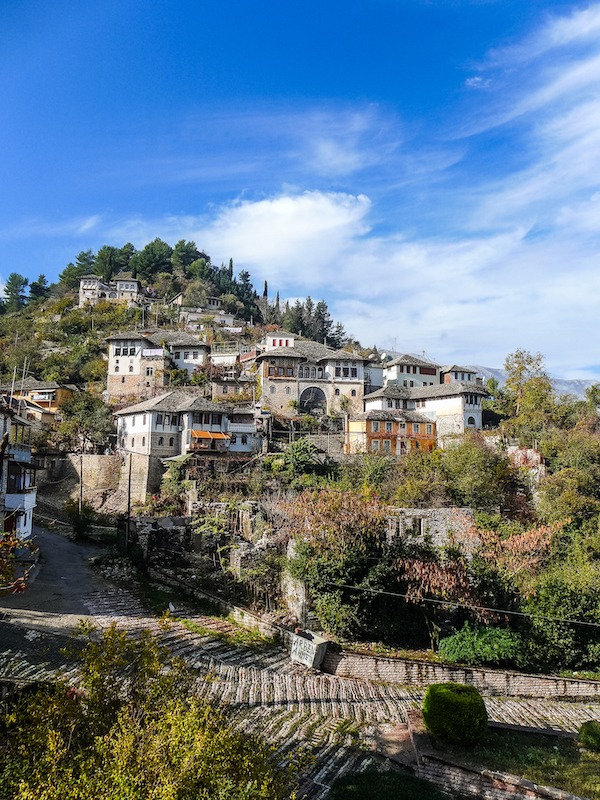
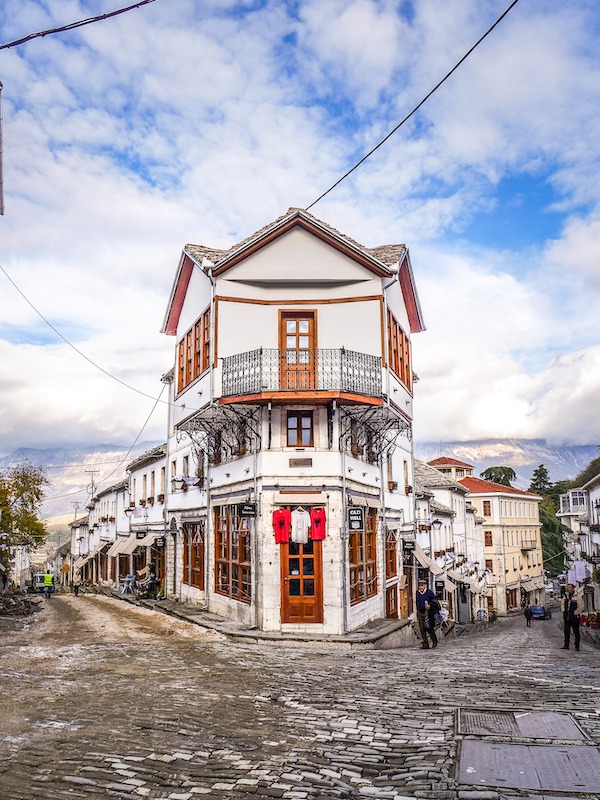
    Gjirokaster was my favourite stop in Albania. The old town looked like it was taken straight out of a fairytale, with beautiful architecture, a big castle on the top of the hill, and killer views over mountains. I was speachelss every morning I woke up to the amazing views from the AirBnb we rented, and just stood for 5 minutes in awe before I could go about my day.

    The views from our AirBnb apartment
    Beautiful architecture in old town, with the mountains in the background

    Read more about Gjirokaster here.

    Berat

    Berat is blessed with a super pretty little old town and a living castle with amazing views over the mountains. This is one of the main places to visit when in Albania, but one can definitely see why with the small cobbled alleys and unique architecture.

    Inside old town of Berat
    Cobbled alleys everywhere. And the new town in the background
    The famous view overlooking the old town

    Read more about Berat here.

    Korçë

    Korçë is a cute small city with an old bazaar area and some beautiful architecture. There’s also a lot of places to visit in the surrounding area – like small mountain villages and hiking etc.

    The square in the old Bazaar area of Korçë

    Read more about Korçë here.

    Shkodër

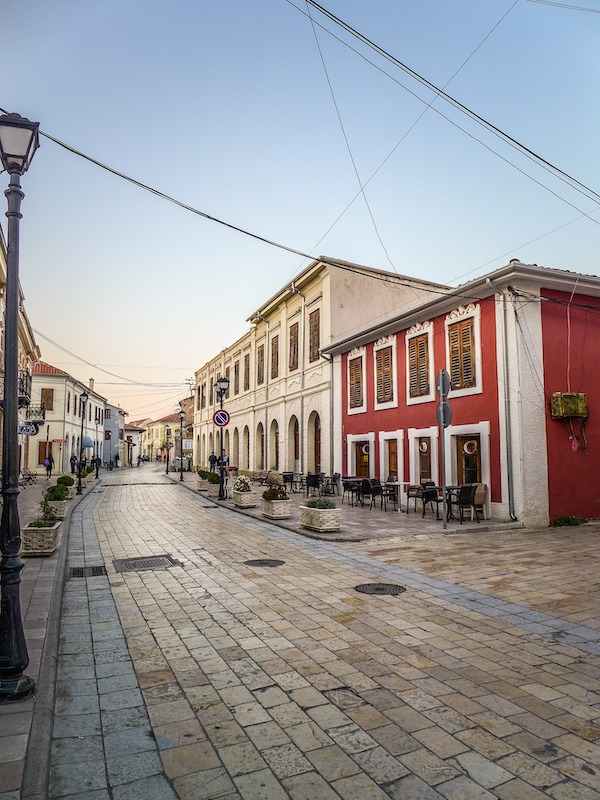
    Shkodër is in the northern part of Albania, close to the border to Montenegro. It’s a beautiful small city with loads of history and architecture to see. A small city centre with loads of places to sit for a cup of coffee and a lively market on weekends.

    Shkodër city centre at sunset
    Village life in Shkodër and all the colorful houses everywhere

    Read more about Shkodër here.

    More Albania!

    Make sure to see our Albania page with all our travel tips, travel map and all our blog posts about Albania.